Log in

Two Trump allies — Alina Habba Mildon and Richard Grenell — are locked in a raging dispute that has its roots in the battle for a share of the spoils in Venezuela.


|
Pragmatic idealist. Worked on Ubuntu Phone. Inkscape co-founder. Probably human.
|

A new bill proposed by Rep. Ritchie Torres (D-NY) aims to establish new regulations that would ensure that "buying a video game would give the consumer ownership of the game rather than a license to play it," including assurances that they can continue to access the games for years after they are released.
The announcement names NBA 2K25 as an example of the problem the bill aims to solve; that game launched on September 6, 2025, but is scheduled to become unplayable on December 31 due to server shutdowns. The bill, which is called the Power to Players Act, directs the FTC to take action to prevent outcomes like that in the future.
Torres published the following statement on the bill:
When you pay for a game, you should own it. Consumers must have the right to own, the right to play, and the right to transfer the games they buy. A game that can be taken away the moment a company pulls the plug is not a purchase. It is a rental disguised as a sale. Families in the Bronx and across the country save up to buy these games, and they deserve better than a license that can vanish at any time. The Power To The Players Act ensures consumers own what they buy and can keep playing long after a company moves on.
"I think there should be a simple rule: if you pay for it, you own it," Torres told Kotaku. He called the new status quo the bill proposes a "restoration to the historical norm," referencing how most games were experienced by players back in the '90s.
The bill comes at a time when game ownership and preservation is a hot-button issue. Some consumers have been protesting Sony's announcement that it plans to discontinue releases of PlayStation games on physical media.
In its most recent financial earnings report, Sony revealed that digital downloads account for 82 percent of full-game unit sales across PlayStation 4 and PlayStation 5 for the covered fiscal year, suggesting that less than 20 percent of games are still purchased in physical media form. But the argument is that continuing to offer physical discs is not just about satisfying a minority of players' habits. Players hope it would aid with long-term preservation of games, which are sometimes delisted from digital marketplaces and then become inaccessible.
Physical discs don't solve the problem on their own, though. Many games sold on discs still require online servers to function, and generally, the end-user license agreements make it clear that the user is purchasing a revocable license, not actual ownership of the media, even if the files are burned onto something physical.
There are also numerous examples of games where the version that shipped on the disc was meaningfully distinct from the version players ultimately know because of patches. So it makes sense that consumers and their representatives are turning to legislation like this to drive a change in industry practices.
There have been activist and lobbying movements, such as Stop Killing Games, that have been advocating for change on this front, but different proposed bills around the world have suggested different kinds of solutions.
Some prior proposed legislation on this issue has required developers to keep servers running indefinitely, leading to criticism that those bills' authors don't understand the cost. This bill appears to take those criticisms into account—but at least as worded in the press release on Ritchie Torres' House of Representatives website, it could still face resistance.
While the announcement does not say the bill requires online servers to remain online, it requires normally online-only games to offer offline modes of play so players can keep playing long after servers might be shut down. The way some online games are engineered, that may not be feasible, so this could require developers to take very different approaches to some online games' architecture.
This bill's proposal does not guarantee it will become law; it still has a long path ahead, and most proposed legislation never even makes it to a vote. And since the full text of the bill is not yet publicly available, it's not yet possible to assess its effectiveness or enforceability.
There is another elephant in the room: Large language models and specialized coding harnesses have recently enabled a wave of decompilations and reconfigurations of both classic and contemporary video games and software. These projects are almost certainly currently illegal, but the scale of the movement is such that enforcement may be difficult. It's possible that these new tools will change the shape of the software preservation conversation in the coming months and years.
Close to 1 billion meetings take place each day around the world. CEOs spend nearly three-quarters of their workdays in meetings. Planning for and spearheading meetings eats up the lion’s share of managers’ time. In much of the industrialized world, meetings are both the metronomes and menaces of people’s working lives.
Given the enormous time spent in workplace meetings, do we know what they accomplish or how to make them as worthwhile as possible? For decades, the answer was… not really. Meetings weren’t a particularly accessible subject of study. But that has changed. Once a tiny niche area, “meeting science” is a growing specialization among organizational and social psychologists. The field is accelerating as archived virtual meetings provide vast swaths of data. And it is providing a fascinating window into human behavior.
Meeting to talk helps fulfill basic human needs to connect, communicate, and cooperate. People have long come together—in caves, fields, market squares, and town halls—to get something done, share ideas, get on the same page, or just to remark on the weather. But meeting scientists define their subject as gatherings of people “with some goal or structure to the event,” says organizational psychologist Liana Kreamer of the Florida Institute of Technology, who coauthored a review of over three decades of meeting science in the 2026 Annual Review of Organizational Psychology and Organizational Behavior.
As a graduate student, Kreamer was interested in studying teamwork, leadership, and work relationships. During her doctorate work with meeting scientist Steven Rogelberg, she realized that meetings would be a fine venue for studying all of that and more. “You can use a meeting as a stage to study anything you want,” she says. After all, at their core “meetings are a fundamental aspect of how we organize and interact as social beings,” Kreamer and coauthors Rogelberg and Jon Gray, both of the University of North Carolina in Charlotte, wrote in the 2026 article.
To tap meetings for study, researchers typically use two approaches. The first is a classic survey in which researchers retroactively ask people about their real or simulated meeting experiences and analyze the responses. The second method is to analyze specific behaviors and trends extracted from audio and video recordings of meetings. Such precise content is “where the music is,” says industrial and organizational psychologist Nale Lehmann-Willenbrock, director of the Center for Better Work at the University of Hamburg, Germany.
In one experiment, Lehmann-Willenbrock and colleagues extracted data from video-recorded meetings to study how leader communication affects team interaction during decision-making. The researchers found that respectful, attentive inquiry by meeting leaders enhanced team performance, in contrast to when leaders asked questions but didn’t attentively listen to responses.
As with many meeting science studies, their findings about what improves meetings’ effectiveness often seem obvious, but meeting researchers note that meetings often stray far from these ideals.
Such research also consistently reveals the importance of active listening, says Lehmann-Willenbrock: not just passive acknowledgement by the listener but actively providing thoughtful feedback. In virtual meetings, because “we’ve all learned to mute ourselves if we’re not talking, very often, active listening is killed completely.”
The balance of listening and speaking also can influence how well a meeting goes. Meeting leaders and participants may retain very different views of whether a meeting was successful, notes Lehmann-Willenbrock. “Often, leaders talk the most, which is also why they often think their meetings are pretty good,” she says. Kreamer also emphasizes that it’s important that meeting leaders lead but not dominate the discussion. Leaders should monitor the proportion of time they are speaking to allow for inclusion of many voices.
Research supports a checklist of additional things that leaders can do before, during, and after a meeting to make it a success, says Lehmann-Willenbrock. To set the stage, leaders should choose appropriate rooms, refreshments, and lighting, invite only those who need to be there, plan to start and end on time, prepare an agenda, set and communicate clear goals, and allow time for pre-meeting conversation.
Socializing first, especially in virtual meetings, is beneficial, Lehmann-Willenbrock says. Her research has shown that “for more introverted participants and more quiet participants, this warmup phase is really helpful because it helps them make more active contributions inside the meeting.”
Indeed, her studies on face-to-face meetings have shown that pre-meeting small talk predicts meeting effectiveness, particularly for more introverted participants. But pre-meeting talk is rare in virtual meetings; she says leaders should consider establishing a norm of arriving early or using the first few minutes for an informal check-in.
Facilitators can increase the likelihood of a successful meeting by making sure all opinions are heard. Kreamer recommends a technique called silent brainstorming to get all participants, even shy and reluctant ones, to engage in idea generation. It involves creating a shared virtual space, such as a chat or online document, to which all participants contribute simultaneously. Kreamer points to a 2009 study that found this approach (some researchers call it “brainwriting”) was more effective than traditional free-for-all spoken brainstorming in meetings.
Kreamer uses this technique when she and her students are dreaming up research ideas in class. “We can all see each other working,” she says, and the quieter students don’t worry about interrupting or having to verbally express their suggestions. After 10 minutes, she reviews the ideas with the group.
Zofia Walters, a doctoral student in industrial organizational psychology working with Kreamer, has been studying another aspect of meeting inclusiveness: the needs of neurodiverse participants. Her studies provide evidence that while practices like minimizing distractions, documenting instructions, using shared calendars, and building regular check-ins into meetings likely benefit all employees, they may be especially helpful for people with ADHD.
In a survey of 147 employees from a variety of workplaces, Walters asked participants about their most recent virtual meeting: how effective it was, how fatigued they felt afterward and their emotional state. Participants also reported how much time they spent multitasking during the meeting, such as by answering emails, and how long their camera was on. They also shared whether they had an ADHD diagnosis, either formal or informal (based on self-assessment).
In findings yet to be published, Walters reported that individuals with ADHD were more likely to report feeling more meeting fatigue, especially when the camera was on for extended periods, than non-ADHD peers. They also reported poorer emotional states. Her findings also suggest that multitasking during meetings may help ADHD attendees manage boredom or hyperactivity.
Effective meeting practices don’t end when the meeting ends. After a meeting, leaders can ensure it was time well spent by communicating action items to participants, taking concrete steps to implement the ideas and tasks generated in the meeting, and assessing employee engagement, meeting satisfaction, and meeting effectiveness, Lehmann-Willenbrock and colleagues concluded in a 2018 paper in Organizational Dynamics.
Does all this time spent in meetings take a toll on workers? The evidence seems to suggest so. Research has found that employees anticipate feeling worse and being less productive when their day is jam-packed with meetings, especially when they are working on complex tasks.
Meetings are sometimes seen as the default way to get things done, but often, people don’t specify what they want to achieve from them, says cognitive scientist Ava Scott of the University of Copenhagen. This, she says, “makes a lot of meetings feel very purposeless.”
Recurring meetings tend to be the most aimless, Scott’s research on Microsoft employees has found; one participant described the content of these successive meets as dreamlike in their similarity to one another. If there’s no clear goal, you don’t know why you’re meeting, and everyone’s very busy, it probably indicates that taking up people’s time with a meeting isn’t ideal, says Scott. Kreamer notes that some companies, such as Shopify, have cut all recurring meetings.
Nevertheless, a 2026 study of more than 9,000 workers in Norway found that while meetings are both common and costly, their benefits may make them worth enduring. The research, led by economist David Deming at Harvard University and based on data collected by Norwegian survey company Norstat, found that meeting intensity is positively associated with subsequent wage growth and on-the-job learning. One possible explanation for the finding is that these meetings may offer the chance to interact with more senior colleagues and so enable the transmission of key knowledge.
The important caveat is that the study, published by the National Bureau of Economic Research, was correlational, so it can’t establish a causal relationship between the number of meetings attended and wage increases; it does further suggest that although the cost of meetings is particularly high for high-wage companies, the benefits may be even higher. That leads the authors to conclude: “Meetings are the broccoli of work—widely disliked, but probably good for us anyway.”
Humor can help make a meeting successful—as long as it’s authentic, supportive, or positive rather than demeaning. Used appropriately, humor can spur new ideas and enhance team performance. This is most likely to work when meeting participants are well-acquainted, Lehmann-Willenbrock reported after analyzing videos of meetings at two German companies. People have to know each other well enough to feel safe making a joke, she says.
But not everyone is comfortable using humor in meetings, says science educator and comedian Vita Stout, now at Sierra College in Rocklin, California. The former bat researcher attended the International Congress for Bat Research in Austin, Texas, in 2022, and took notes on the jokes being used in meeting talks—transcribing exact quotes, their timing, and audience response. Stout’s research, coauthored with bat scientists and published in the Proceedings of Biological Sciences B, argued that when well-timed and used appropriately, humor in scientific meetings can be a tool for connection and community-building. But joke-telling was more prominent among meeting participants with privilege and power, with older, well-established male scientists making jokes more frequently than early career researchers and scientists from underrepresented groups.
As in comedy, timing is also key when planning meetings. Scheduling should consider the human circadian rhythm and avoid meeting during the after-lunch energy dip. Lehmann-Willenbrock admits ruefully that her own academic environment often doesn’t obey that rule. “A lot of our committee meetings are scheduled when people are at their most tired,” she says, or digesting lunch.
It’s also important to be mindful of people’s work and family obligations in meeting scheduling. “I have two small kids,” she says, “and I always get really angry when a meeting gets called that’s about something… diversity- or inclusion-related, and then it’s scheduled at 5 pm.”
Some research suggests there are cultural differences in basic expectations for meetings. In a survey of 1,432 workers from six countries, for example, Lehmann-Willenbrock and collaborators measured how frustrated, irritated, and upset individuals became in imagined scenarios in which leaders or other participants showed up five, 10, or 15 minutes late to meetings. Respondents from the United States and the Netherlands were especially perturbed by a late leader and a high degree of lateness. People from China and Chile weren’t so frustrated by the same situations.
There are very few cross-cultural studies like this in the world of meeting science, says Kreamer. “We have these best practices of meetings that we’ve learned over the past 30 years,” she says, but the bulk of studies have come out of Europe or North America. That’s a deficit she’d like to see addressed to see whether the same rules for optimal meeting success apply. As soon as those results are out, we’ll have to call another meeting.
Knowable Magazine, 2026. DOI: 10.1146/knowable-101426-2
This story originally appeared in Knowable Magazine.

How many young AI cloud providers can the market, and Nvidia, support?
That’s one of the big questions after a week in which investors worried about the data center buildout and the risks that its unproven participants, known as neoclouds, are taking. Those risks include loading up on debt (CoreWeave) or trying to go public without much of a track record (Firmus and Nscale). Firmus abruptly pulled its public offering last week while shares of CoreWeave and its smaller rivals fell around 20%. The concerns even hit bigger AI cloud providers like Oracle.
Data center and neocloud executives told me there’s a limit to the number of AI cloud providers that can exist, even if Nvidia provides many of them with investment or backstops.
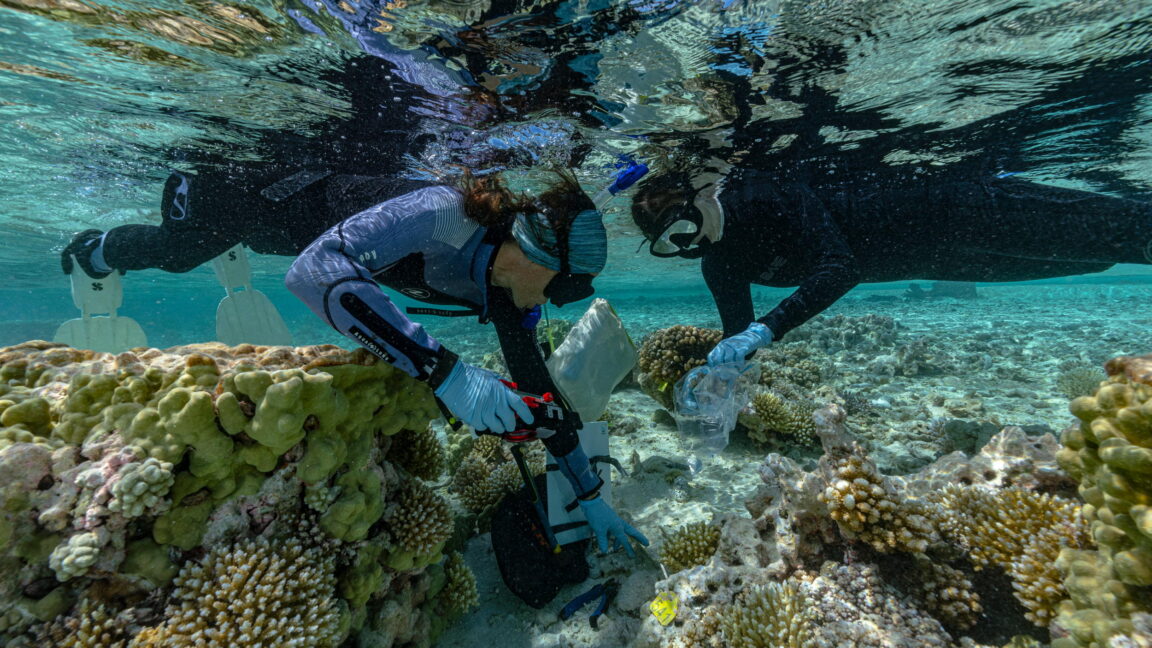
Coral-fringed tropical atolls are among the landforms most threatened by global warming, but many have a potential superpower: Healthy ecosystems may help them keep pace with rising seas.
Atoll islands with native vegetation and thriving seabird populations are “naturally active systems that can change and adapt to their environmental conditions if they are allowed to do so,” said Nick Graham, a marine ecologist at Lancaster University in the United Kingdom, who led an international team of scientists that studied island resilience across 28 atoll islands in the Pacific and Indian oceans.
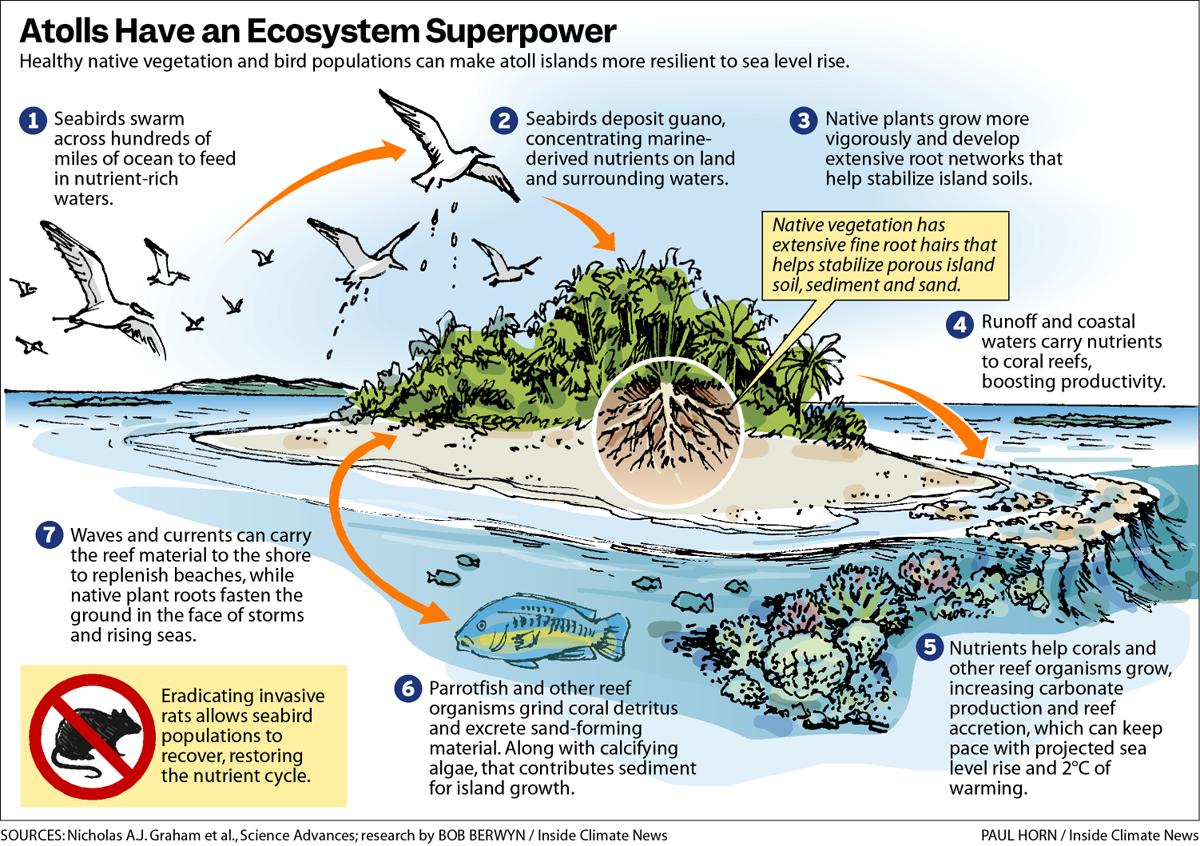
Their paper, published Wednesday in Science Advances, shows that restoring atoll ecosystems reinforces their growth. Seabirds ferry nutrients from the open ocean and deposit them on the atolls as guano that nurtures land plants, marine life and coral growth. This provides more material for reef building, as parrotfish and other reef feeders turn dead coral into sand to maintain beaches, while native plants with extensive root networks stabilize sediments.
Eradicating rats and replacing coconut plantations with native forests and brush could give some atolls a “fighting chance” to persist at the rate of sea-level rise expected toward the end of the century with about 2° Celsius (3.6° Fahrenheit) of warming, Graham said.
The findings provide more evidence that nature restoration can buffer the impacts of global warming. For example, restoring wetlands and forests dampens swings between wet and dry spells, reducing flood and fire hazards. Restoration efforts can also slow global warming by supporting natural carbon storage.
On the 28 atoll islands Graham’s team studied, strengthening the dynamic system of seabirds, native vegetation, and reef systems starts a virtuous cycle, as ecosystems become better able to sustain themselves and build resilience to growing impacts.
The research included data from islands in the Seychelles and Chagos archipelagos in the Indian Ocean, and Tetiaroa, an atoll in French Polynesia in the Pacific Ocean. Graham said terrestrial ecologists, marine ecologists and geomorphologists combined measurements of seabird populations, native vegetation, and coral and reef organisms to trace how energy moves through the ecosystems.
 Healthy coral reefs grow quickly and help build the rocky bones of atoll islands as they fossilize and fracture into boulders.
Credit:
Bob Berwyn/Inside Climate News
Healthy coral reefs grow quickly and help build the rocky bones of atoll islands as they fossilize and fracture into boulders.
Credit:
Bob Berwyn/Inside Climate News
The scientific approach, called ecosystem energetics, uses energy flow as a common currency to connect organisms typically studied in isolation.
Seabirds link the open ocean, where they feed, to the land, where they nest. Thousands of birds swarm out across vast seas, and the food they digest is concentrated into a nutrient-rich guano. Islands with greater seabird nutrient input tended to have more productive coral communities and a higher energy flow.
Parrotfish and other reef nibblers also contribute to energy flow by scraping the coral to feed on dead organisms and excreting sand-sized particles. Calcifying algae, other reef organisms, and shellfish help build the reef framework upward, helping reefs continue to buffer islands from waves.
In the terrestrial part of the cycle, restoring native vegetation that coconut plantations replace is crucial. Coconut palms have small, unstable rootballs that leave the surrounding soil vulnerable to erosion. Native plants, by contrast, have huge networks of finely meshed roots that bind and stabilize the shallow, porous soil and also provide better habitat for seabirds.
Restoring the nutrient cycle also means eliminating invasive rats brought by colonizers that have devastated seabird colonies for centuries. This cycle has been sustaining atoll ecosystems at least since the end of the last ice age. A 2026 study of 288 reef core growth records found that most kept pace with rising seas, although that capacity varied by location and is not guaranteed at the current rate of warming.
 Credit:
Paul Horn/Inside Climate News
Credit:
Paul Horn/Inside Climate News
The new study measures the “reef accretion potential” for the islands, showing it to be twice as high on lagoonal and ocean-facing reefs around rat-free islands with abundant seabirds as around rat-infested islands. That would be “sufficient to closely keep up with predicted sea-level rises to the end of the century under a 2° Celsius warming scenario,” said co-author Casey Benkwitt, a California-based restoration scientist with The Nature Conservancy.
Reef growth rates without seabird populations are less likely to keep pace with projected sea-level rise, she added.
Graham cautioned that the study doesn’t imply a miracle solution for global warming impacts to low-lying islands. It didn’t make direct before-and-after restoration comparisons, and the data came from islands with different levels of seabird abundance and rat infestations, differences the research team tried to smooth out with an ecosystem energetics framework.
And reef accretion doesn’t always mean an atoll is growing vertically, because global warming is also changing waves, winds, and currents that affect where the material ends up. The study also focused on mostly uninhabited or sparsely populated islands with room for native ecosystems. On developed atolls, he said, restoration efforts can help but won’t replace the need for engineering solutions.
The study helps show a nearly complete loop, “from ocean-foraging seabirds, through native forests and coral reefs, back to the construction and stabilization of the islands on which the birds breed,” ecologist Hillary Young wrote in a Science Advances Focus commentary. Quantifying the loop provides “much-needed evidence that the fate of an atoll cannot be understood or managed by treating its land and sea separately,” she wrote.
Local conservation can influence physical resilience to rising seas, but, she wrote, “rapid reductions in greenhouse-gas emissions remain essential to long-term viability of these systems.”
Bob Berwyn is an Austria-based reporter who has covered climate science and international climate policy for more than a decade. Previously, he reported on the environment, endangered species, and public lands for several Colorado newspapers, and also worked as editor and assistant editor at community newspapers in the Colorado Rockies.
This story originally appeared on Inside Climate News.