Log in


Last month, we shared word of a Stanford University study that found entry-level employment in so-called "AI-impacted" occupations lagging well behind that in other fields. Now, a new working paper from economics researchers at Munich's CESifo finds the opposite, arguing point blank that "there is no evidence of any significant, widespread displacement or reduction in hiring of recent college graduates in absolute or relative levels."
In "The Early Impacts of AI on Employment Among Recent College Graduates," researchers Robert Fairlie and Jane Wu said they decided to focus on recent graduates "because changes in labor demand may first appear through reductions in hiring." As AI gets good enough to at least perform the "relatively standardized tasks" in many entry-level office jobs, they argue, firms could reduce new hiring for simpler roles rather than laying off more experienced long-term employees.
There's some reason to believe 2026's graduating job seekers might be more at risk of AI displacement than those graduating just a year or two prior. The CESifo researchers point to a recent sharp increase in the number of firms "replacing a large number of employee tasks with AI" in a Census survey, as well as broad increases in AI spending per employee and ChatGPT Enterprise token use in the last 12 months.
Anecdotally, some major names also think that this is the year AI is finally capable enough to start replacing the jobs of some recent graduates. Venture capitalist Marc Andreessen said earlier this year that "AI literally until December [2025] was not actually good enough to do any of the jobs that they’re actually cutting." And BlackRock CEO Larry Fink said in March that "the speed at which AI is changing" led him to worry that "when this year's college graduates enter the workforce, we could see the highest unemployment rate among them in years—even without a recession."
Nothing to see here (yet)
To determine if those kinds of worries were valid, the CESifo researchers looked at detailed microdata from the US Census' Current Population Survey to determine unemployment trends among recent college graduates (i.e., Bachelor's degree recipients 22 to 25 years old who aren't pursuing higher degrees). Since these unemployment numbers predictably spike as fresh graduates enter the job market in the summer months, the researchers looked at year-over-year and seasonal trends going back to 2022 (which is both the year employment returned to pre-pandemic levels and the year ChatGPT was released).
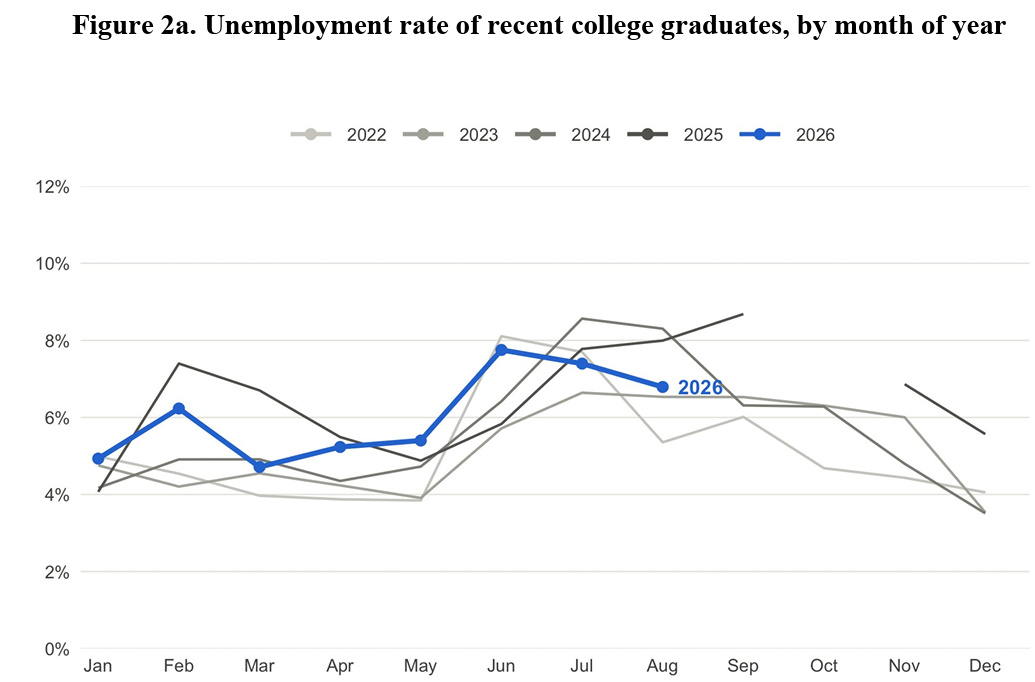 The 2026 jobs market looks incredibly normal for recent graduates.
Credit:
CESifo
The 2026 jobs market looks incredibly normal for recent graduates.
Credit:
CESifo
At a base level, the summer unemployment rate for those young college graduates in 2026 (7.3 percent) was well within the range seen in previous years (from 6.3 percent in 2022 to 7.8 percent in 2024). The 2026 numbers were similarly unremarkable when expanded to include graduates who told the CPS survey they "want a job" even though they weren't actively looking for one (and thus don't officially count as part of the official "unemployed" labor force).
To test the robustness of these findings, the researchers created statistical tests to compare the recent college graduates both with non-college graduates in the same age range and with older college graduates (aged 30 to 49). They also broke down employment by potential "AI exposure" based on a 2023 study of which job roles AI systems were best equipped for.
In almost all of the comparisons, any trend differences between the groups in the 2022 to 2026 time frame studied were not statistically significant. Overall, the data “tell a consistent story in which unemployment among recent college graduates in summer 2026 was not unusually high relative to earlier summers” across comparison groups, the researchers wrote.
So how does this analysis square with the recent Stanford study that found an almost completely opposite result? Well, Stanford’s study was based on payroll data from HR firm ADP, which covers a decent cross-section of the economy but might miss some elements of a wider Census survey. The ADP data also looks at the total supply of jobs in various fields, while the unemployment rate being studied here also takes into account the aggregate demand for those jobs. That demand could easily shift even if the supply of jobs in certain fields starts contracting due to AI.
Overall, the CESifo researchers conclude that the Summer 2026 unemployment data serves as a “useful first test” of how accelerating AI usage is—or, as the data show, is not—impacting the current US job market. But current trends do not imply future performance, of course, and the researchers warn that “if the intensity of AI use in the workplace continues to increase, the graduating classes of 2027 and later might be more affected than the class of 2026, and additional years of data will be needed to hone in on whether effects emerge as workplace use of AI deepens.”



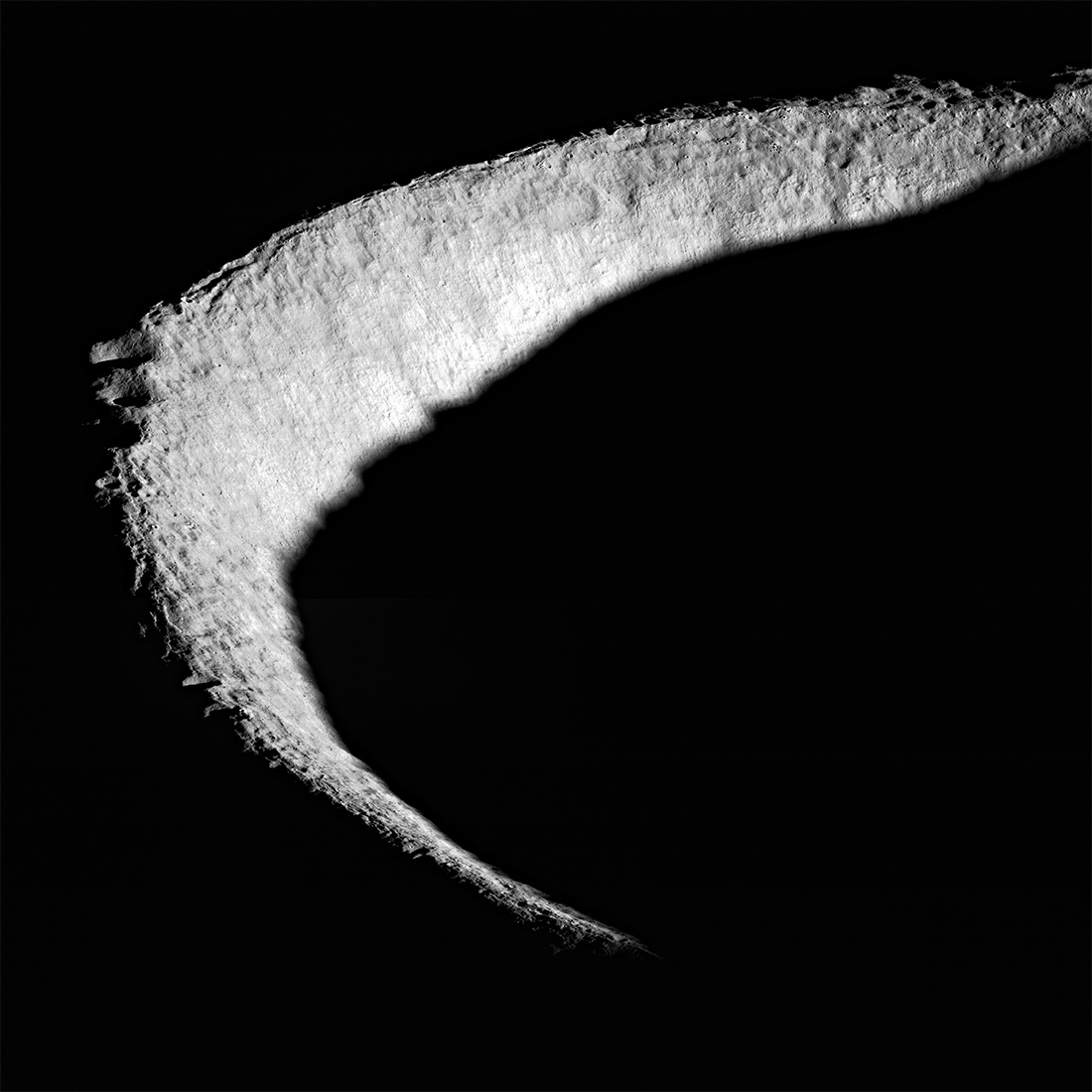 The rim crest and upper part of the rim of Shackleton Crater, as viewed by NASA's Lunar Reconnaissance Orbiter. The Moon's south pole is located on the rim near the upper-right corner of the image.
Credit:
NASA/GSFC/Arizona State University
The rim crest and upper part of the rim of Shackleton Crater, as viewed by NASA's Lunar Reconnaissance Orbiter. The Moon's south pole is located on the rim near the upper-right corner of the image.
Credit:
NASA/GSFC/Arizona State University
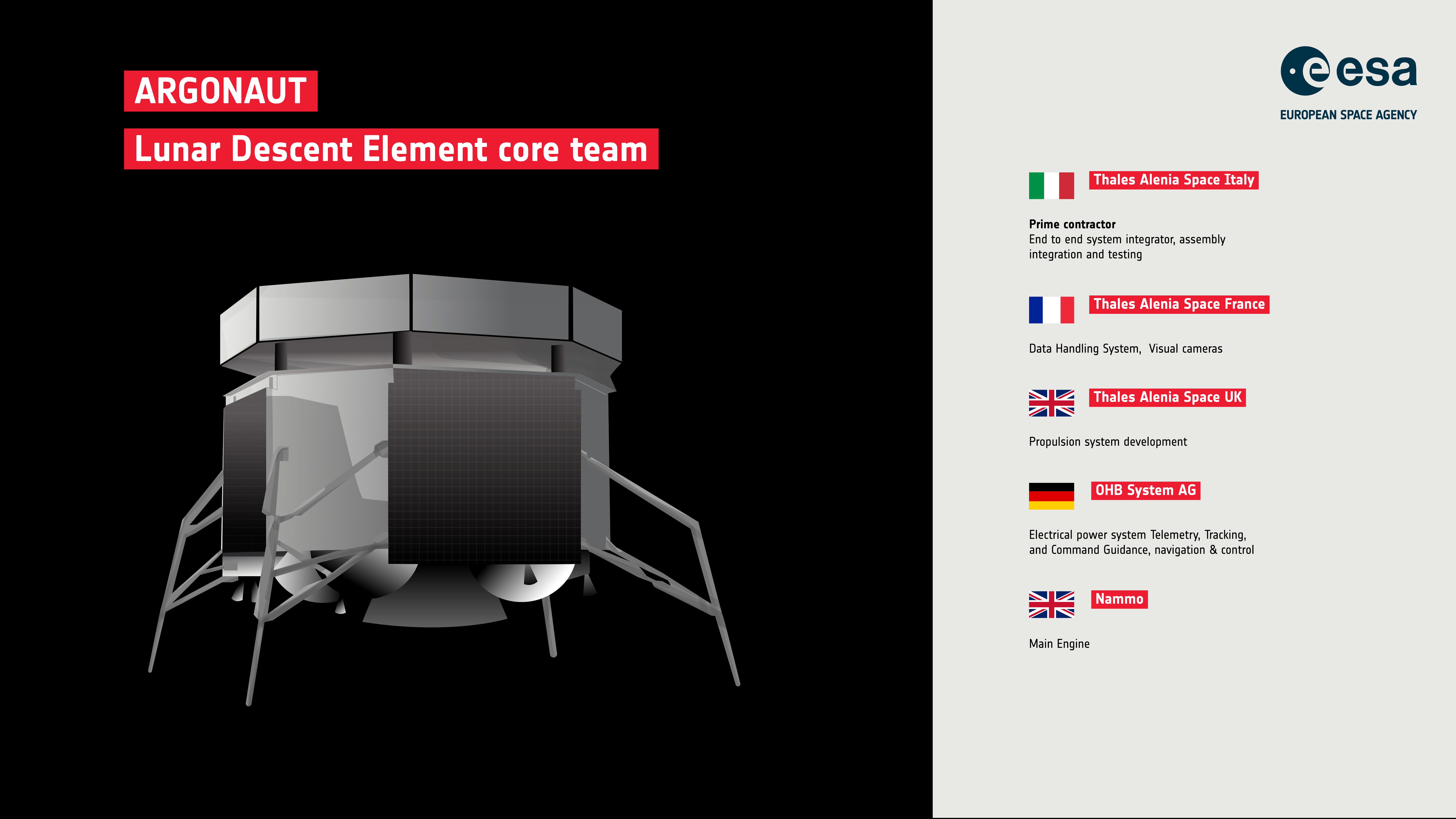 ESA's Argonaut would include elements from across Europe.
Credit:
European Space Agency
ESA's Argonaut would include elements from across Europe.
Credit:
European Space Agency