Log in


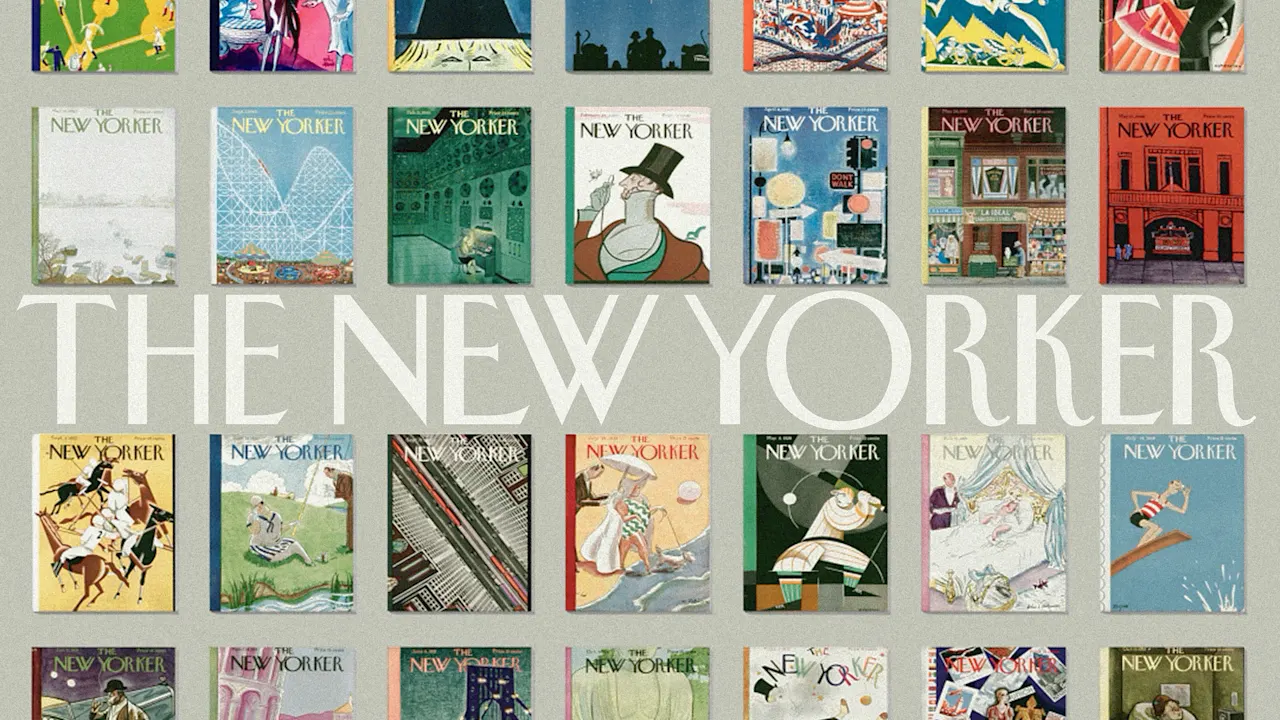
You can now read every article that has ever appeared in The New Yorker—from as early as February 1925—with the click of a button.
For the publication’s centennial anniversary, its editorial team has spent months painstakingly scanning, digitizing, and organizing every single issue it’s ever published, or more than half a million individual pages. Each issue is artfully arranged in a chronological display under a purpose-built archive section of the website; but the content has also been incorporated into The New Yorker’s search algorithm so that readers can come across it organically.
As the future of magazine journalism remains uncertain, a look back through this carefully archived material demonstrates the importance of preserving print media for the future.
Digitizing a century-old archive
The process of digitizing The New Yorker’s full catalog actually started back in 2005. That year, explains Nicholas Henriquez, the publication’s director of editorial infrastructure, Random House published The Complete New Yorker, a book that came with DVD-ROMs (now retro tech) containing scanned pages from all the pre-digital issues. Then, in early 2024, Henriquez’s team started to convert those scans into digital text.
To start, this meant consulting with The New Yorker library, where the magazine’s physical archives are stored, to re-scan several hundreds of pages that required another pass for a number of reasons—including damage, a poor initial scan, or a corrupted file. “Some of the older issues, from the first five years or so, were basically untouched,” Henriquez says. “I had to use a letter opener to open the pages to scan some of them.”
After the team had a complete collection of files, they then began the painstaking process of formatting and styling them for the web. There were the predictable challenges of making old magazine articles work online. Each needed a workable headline, description, and image. Bylines in particular were tricky, Henriquez says, as many early writers would use pseudonyms or humorous one-off pen names—or, in some cases, fail to sign their name at all.
“That’s part of the value of having, as The New Yorker does, a team of technologists who are part of the editorial staff: We can build these databases and apps and scripts, and we can also look at something in that database like ‘Ogden de Sade’ and know, okay, that’s Ogden Nash, and it’s funny, and we should figure out a nice way to keep that joke online,” Henriquez says. “There were many instances where our technological approach was informed by this deep understanding of the magazine’s history and its cultural context.”
Unearthing a treasure trove of early journalism
Over the course of this process, Henriquez unearthed stories that he never could have expected. He came across a short, unsigned book review from 1935 of a memoir by a survivor of a Nazi concentration camp, and says he had to “triple-check that we didn’t have bad data somewhere, because that review was published in March of 1935, just two years after Hitler became chancellor. I didn’t realize those stories were out there that early, much less being translated into English and published in America.”
On a lighter note, he also found a piece about going to the Newark airport at the dawn of commercial aviation in 1933, and a 1947 article that’s one of the first examples of TV criticism ever published by The New Yorker. Along the way, he says, he rediscovered what makes magazine writing special.
“In a newspaper, most stories have the same framing: ‘This happened,’” Henriquez explains. “But a magazine article can do something different: It can be told in a different tense or in a different way—‘This could happen,’ ‘This happened to this person.’”
Examples of this distinct genre of analysis include a 1969 article, a few months before the moon landing, that lays out how it will happen, step-by-step; or a pre-Sputnik piece about American scientists trying to launch the first satellite; or a 1961 feature on the rollout of desegregation, as witnessed by author Katharine T. Kinkead and a group of Black college students driving around Durham, North Carolina.
Henriquez says: “These kinds of things, I think, make magazine journalism essential and unique.”