 Log in

As artificial intelligence bots spread, we are increasingly glimpsing how these digital entities interact and what they talk about with one another.

|
Pragmatic idealist. Worked on Ubuntu Phone. Inkscape co-founder. Probably human.
|

Shocked by the U.S. agreement with Russia, which Ukraine has called “a gift” to President Putin, officials in Europe have coalesced around a cautious diplomatic message.

Texas, USA

A pair of low-profile entrepreneurs gave $100 million to Nigel Farage’s Reform U.K. Party. The system may never be the same.

Texas, USA
Cephalopods are masters of camouflage. Scientists want to decipher how the process works in the brain.
Texas, USA
As the head of the International Committee of the Red Cross, Mirjana Spoljaric goes to both sides of conflicts. She’s worried that our warring world is spiraling out of control.

Texas, USA

For about a decade, the mainstream understanding has been that psychedelics cause chaos in the brain. Brain networks—the stable patterns of communication that handle vision, attention, or our sense of self, and more—loosen and start talking to each other all at once. EEG traces get noisier and more complex. “Think of the networks of the brain as highways,” says Devon Stoliker, a neuroscientist at Monash University. “Under psychedelics, these highways break down into many different directions.”
In a recent Nature study, Stoliker’s team designed an experiment to test whether these directions are truly chaotic and random. Researchers gathered 62 people who had never taken a psychedelic before, gave them 19 milligrams of psilocybin, a common psychedelic found in certain fungi, and scanned their brains. Then, they used AI to analyze the drugged and sober brain scans. What emerged was not exactly chaos.
An uninterrupted trip
Stoliker thinks chaos is not a satisfactory explanation for psychedelics’ effect on the brain. “It never really explained why an individual would have a meaningful experience, why they might have insight, why they might experience clarity, and why these might translate into positive psychological changes,” Stoliker says. To investigate if there are other explanations, he and his colleagues designed a study called PsiConnect.
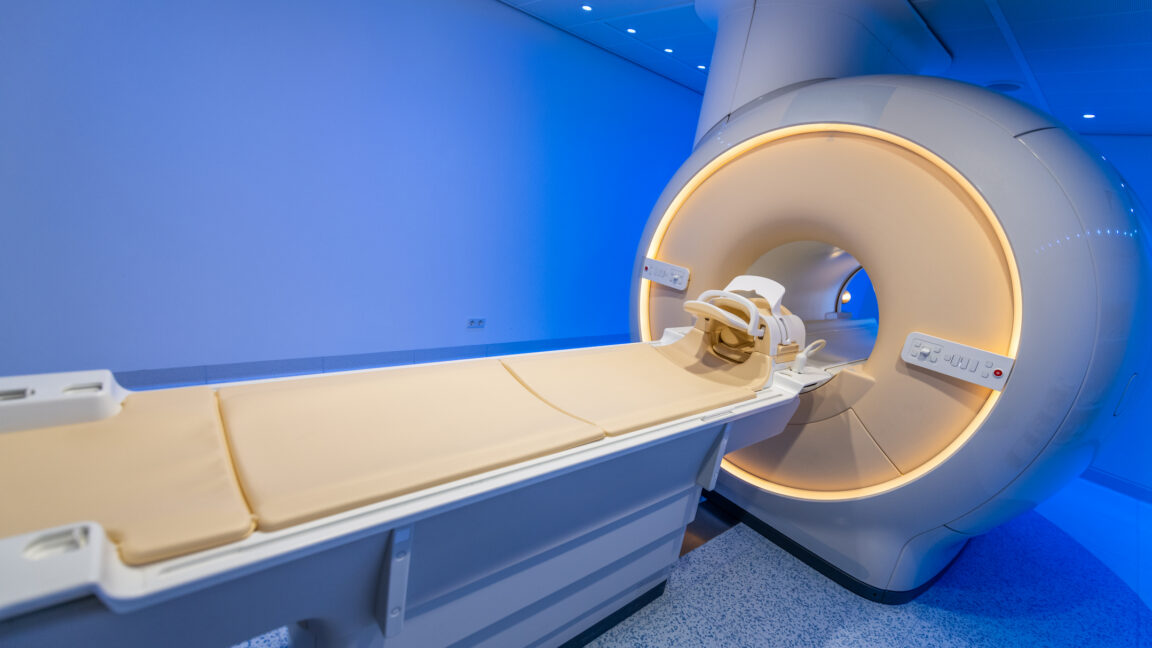
Volunteers went through the same four-part sequence twice, once sober and once on psilocybin. The sequence included putting participants in four different settings or contexts: eight minutes of lying at rest, a guided meditation, an 11-minute curated music playlist, and finally six minutes of eyes-open video of clouds moving across a sky. Each participant did all four inside an MRI scanner about 80 minutes after dosing, and again on EEG about 150 minutes after.
There were no cognitive tasks researchers routinely go for in brain studies, but there was a purpose behind this omission.
“We wanted ecological validity,” Stoliker says. “We wanted to know what the brain was like when somebody was having an authentic, uninterrupted psychedelic experience. If somebody took a psychedelic in a therapeutic setting, you wouldn't have them completing tasks.” Stoliker also points out that there's evidence that giving someone a task mid-trip pulls them out of the state—a phenomenon researchers sometimes call grounding. “Once you introduce these sorts of tasks, you're actually interrupting the very phenomena you are seeking to measure.” And it worked.
Half of the participants ranked their session among the most meaningful experiences of their lives, and 24 put it in their personal top five. Stolkier and his colleagues started analyzing their brain scan data to find out why.
Blurred boundaries
Measuring global functional connectivity—how much influence each patch of cortex exerts over the rest—the team found that, when participants had their eyes closed, sensory regions lost sway while associative regions gained. “It seems like the brain's ability to construct reality, or imagination, or our associations, our beliefs, our sense of self—these faculties had more dominance over sensory areas,” Stoliker says, stressing that the interpretation is a hypothetical. “This could help explain why people have meaningful, complex imagery experiences, why they have mystical experiences with imagery that is personally relevant to them.”
Another observation the team made was that connections within each brain network weakened, connections between networks strengthened. The brain's modularity, a parameter that describes how cleanly neurons stay sorted into specialist teams, dropped across all four parts of the experimental sequence.
What’s more, researchers found that, when sober, activity in a brain with its eyes shut looked very different from a brain watching a movie. Under psilocybin, that difference nearly evaporated. In the visual network, the gap between eyes-open and eyes-closed connectivity shrank by 85 percent. The results from the EEG session independently confirmed that, with alpha-band activity (normally a marker of the brain gating visual input) reduced by nearly half.
“When somebody takes a psychedelic and they're able to close their eyes and see complex imagery, there seems to be less boundary between the internal and external world than we ordinarily experience,” Stoliker says.
Regardless of these details, the results rather accurately reproduced the chaos in the brain so many researchers claimed psychedelics caused. This chaos, though, turned into order when the team processed their data in a slightly unorthodox way.
Hidden order
Scientists usually do two acts of averaging in a standard brain imaging study. The first is averaging over time. An eight-minute brain scan comprises a few hundred successive images of the whole brain. To understand how two specific regions work together, researchers conventionally average all these images down to a single number describing how well the two regions' activity matched up across the whole eight minutes.
The problem with this analysis is that it runs the risk of missing ordered structures that appear for a brief period and then disappear into chaos.
The second analysis is averaging over people. Having produced one such number per participant, the standard approach then pools all of them into a group average, on the assumption that individual differences are noise that will be canceled out. Stoliker’s study was focused on individual experiences, so he wanted to avoid that.
Instead, the team fed the moment-by-moment activity of 332 brain regions into CEBRA, a machine-learning tool that compressed the data down to its essential structure while preserving the order of events. For each individual, it produced a trajectory—a path traced through a three-dimensional space, one point for each moment of the scan.
“When they're not under psilocybin, the brain activity is less differentiated by context,” Stoliker says. "But under psilocybin, we see that the activity becomes organized across time and more clearly differentiated by context.” The trajectories separated into four distinct clusters corresponding to rest, meditation, music, and the movie. A classifier could read a moment of brain activity and say which one the person was in.
It turned out the performance of that classifier scaled with how profound the participants described their experience as being.
One with the world
To find out which parts of the brain were doing the work, the team replaced one network's psilocybin activity with its sober version and checked how badly the classifier degraded. The default mode network and the visual network each accounted for over 20 percent of the effect. “The default mode network is strongly associated with the sense of self: daydreaming, mind wandering, thinking about yourself. It's often been called the narrative self,” Stoliker explains. “On the other end of this gradient, more externally oriented, is the visual system.”
Under psilocybin, the two became less differentiated, which the team thinks explains why participants reported a subjective experience of the self and the external world becoming less separate, a state Stoliker calls “embeddedness.”
“Theoretically, we could suggest that psychedelics are temporarily altering the organization of brain networks that ordinarily help maintain this separation that we experience,” he says. "It really challenges the idea of whether the internal world and external world are separate and highlights the idea that the brain may be responsible for constructing both.”
Tuning the room
The day after the session, participants rated whether various things had shifted, like sense of connection to themselves, to others, to nature, along with peace, acceptance, and creativity, all on a scale running from –100 to 100. “For the vast majority of our participants, we found they had positive psychological changes the next day,” Stoliker says. The data from the brain reading classifier the team used for discriminating among meditation, rest, the movie, and the music tracked with the size of that shift.
In the future, Stolkier hopes to use this for therapeutic purposes. If context isn't just mood-setting but is mechanically shaping brain organization, Stolkier argues, then the room, the playlist, and the instructions start to look like clinical variables a clinician could deliberately tune to improve therapeutic outcomes. But there are details the team must work out first.
As of now, the researchers admit that when two people report identical “embeddedness” scores, they can potentially have very different subjective experiences. Also, all the volunteers in Stoliker’s study were healthy individuals, not patients suffering from psychological or psychiatric disorders that potential therapies using psychedelics could be aimed at.
Finally, we still don’t know how exactly variables like music or visuals should be tuned. “That's a future avenue where we need more research to determine exactly what conditions should be optimized, and for who. It's quite possible we would want to take different approaches for each individual, or depending on what their diagnosis is,” Stoliker says. “Still, finding this level of organization hidden underneath that disorder and chaos has some really good explanatory value.”
Nature, 2026. DOI: 10.1038/s41586-026-10910-z
Texas, USA
Next Page of Stories