Log in


You’re three days into a work trip in a foreign city, running late for a meeting, and you yank the zipper on your carry-on one last time to force it closed. It catches. You pull harder. The slider pops off the track, and suddenly a piece of luggage that cost you several hundred dollars is, for all practical purposes, an open box with wheels. You find a hotel concierge who points you to a cobbler. You buy a roll of duct tape. You miss your meeting.
The zipper is the single most common failure point on a rolling suitcase. It’s the part under the most stress every time a traveler overpacks, sits on the suitcase’s lid to close it, or hands the bag to a gate agent to be tossed into a cargo hold. And once the zipper goes, most luggage is effectively unusable.
Some brands, like Rimowa and Away, offer repair programs, but they typically require shipping the bag back to a service center or dropping it off in person at a store—a process that can take weeks. Lower-priced brands sometimes find it cheaper to send a customer a replacement bag than to fix the old one, which means the broken suitcase ends up in a landfill.
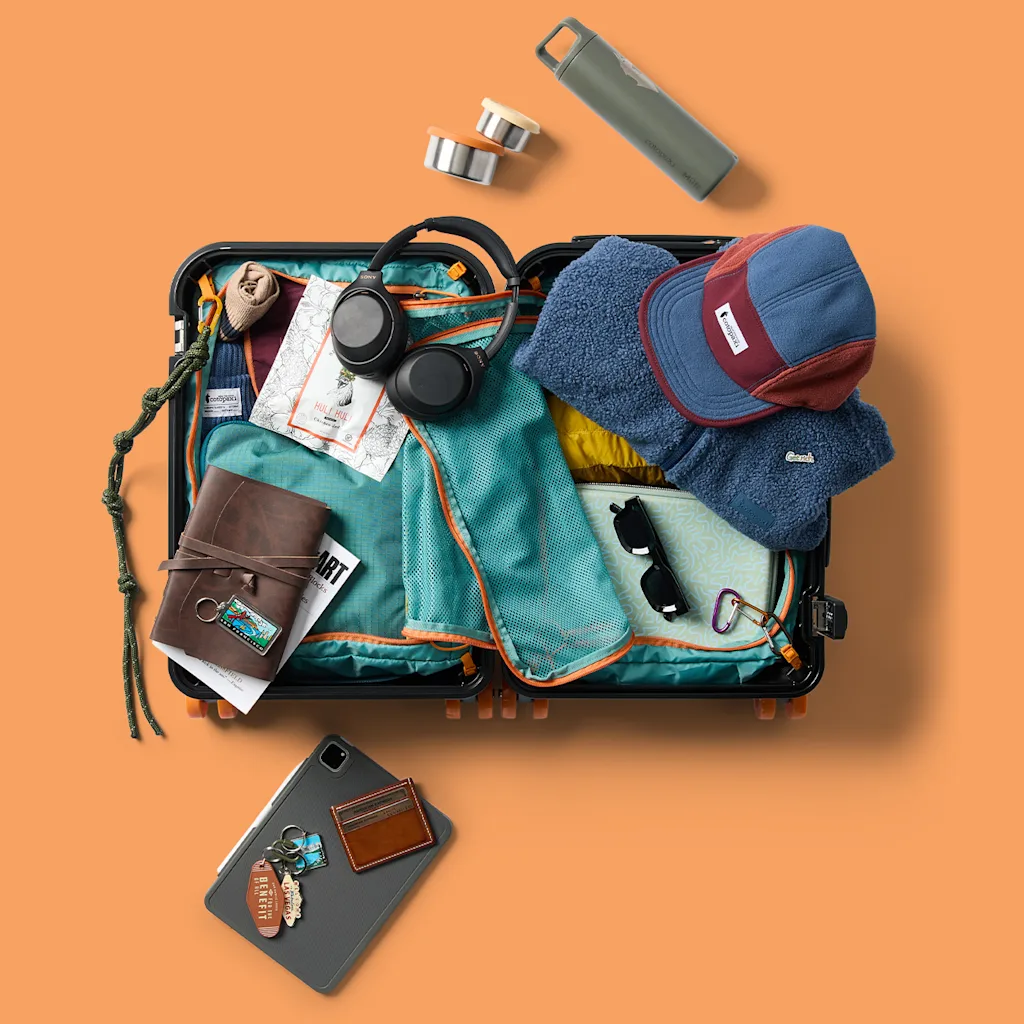
Cotopaxi, the 12-year-old outdoor brand known for its colorful, llama-logo backpacks and its commitment to sustainability, is offering a solution that could fix those friction points. The brand is launching its first-ever hard-side roller suitcase line, called the Coraza, built on the philosophy that you should be able to fix your luggage when it breaks. It’s available online and in select stores starting today, and costs $295 for the carry-on size and $345 for the checked size.
Each of the parts most likely to fail—the closure, the wheels, and the handles—can be easily repaired at home or on the road. That’s not just more convenient; it also prolongs the life of the suitcase, keeping it out of a landfill. “This has been in development for a few years,” says Cotopaxi CEO Lindsay Shumlas. “The intent was to create something that is built to last, but also built to be fixed.”
A Zipperless Design
Most roller suitcases on the market today close with a zipper, but zippers are notoriously hard to fix. So Cotopaxi’s design team found a different closure mechanism altogether.
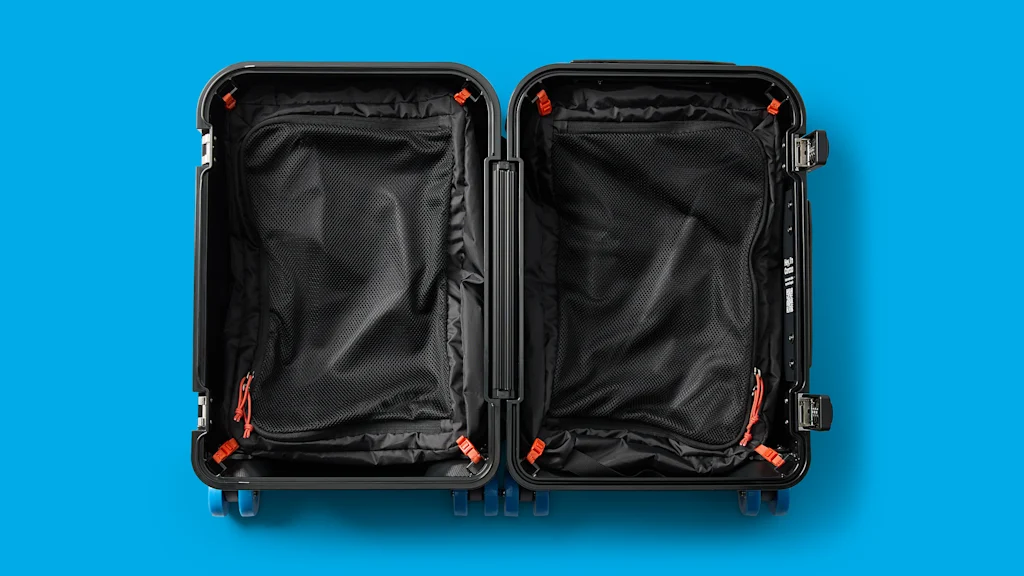
Coraza uses two reinforced latches that snap the shell shut, with integrated TSA locks. If a latch ever breaks, Cotopaxi will ship a replacement part to the customer, free of charge, with a QR code inside the bag linking to step-by-step repair videos.
The interior is modular: removable, recycled-polyester liners that function as built-in packing cubes and can be pulled out to hang in a closet.
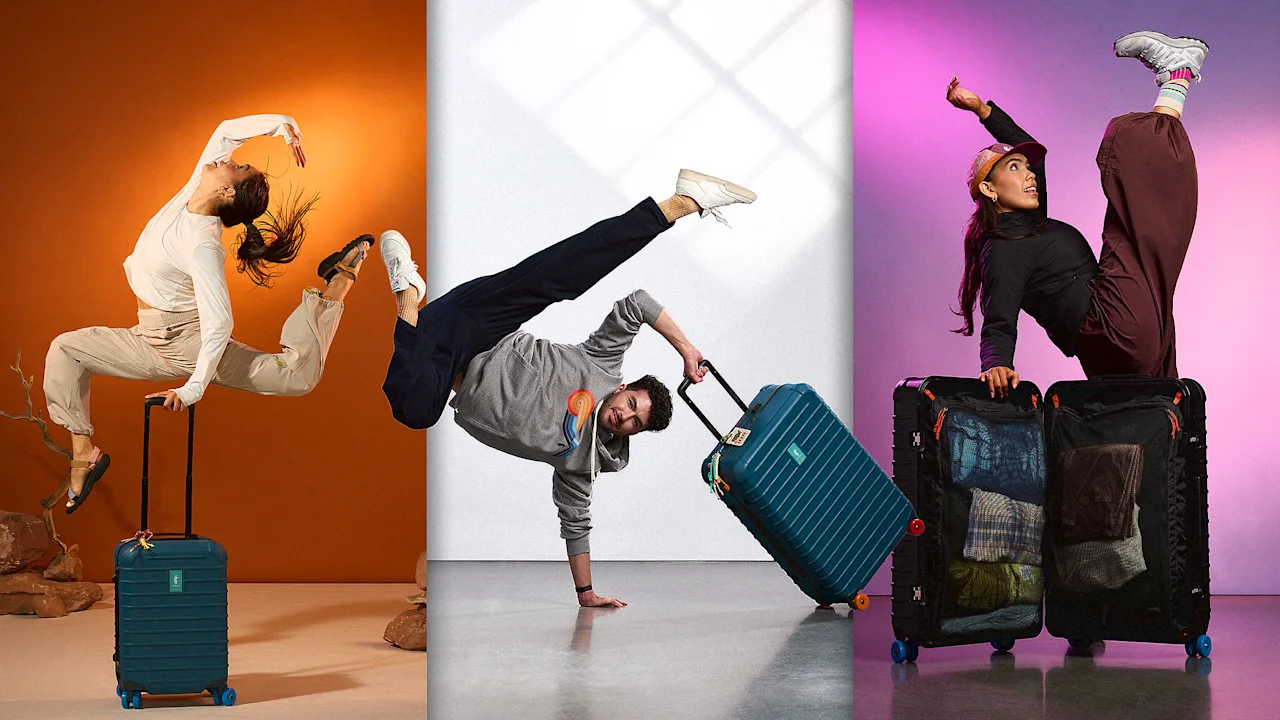
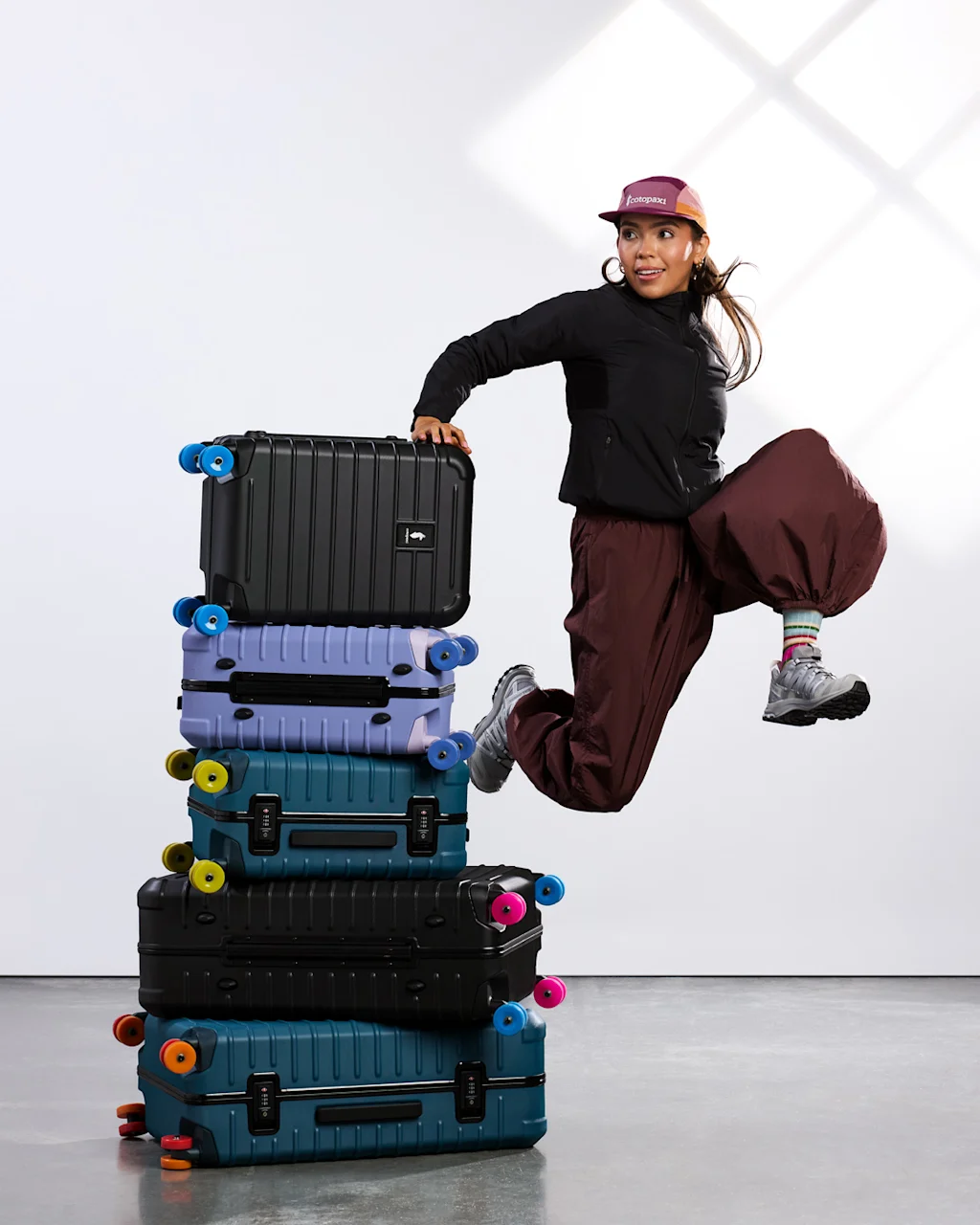
The wheels, which Shumlas compares to skateboard wheels for the way they glide, come off with a few bolts and can be swapped by the traveler. The ad campaign to launch Coraza features a dancer, a choice Shumlas says was meant to convey how smoothly the bag moves. “I have never had smoother luggage, and it is really the skateboard wheels that do it,” she says.
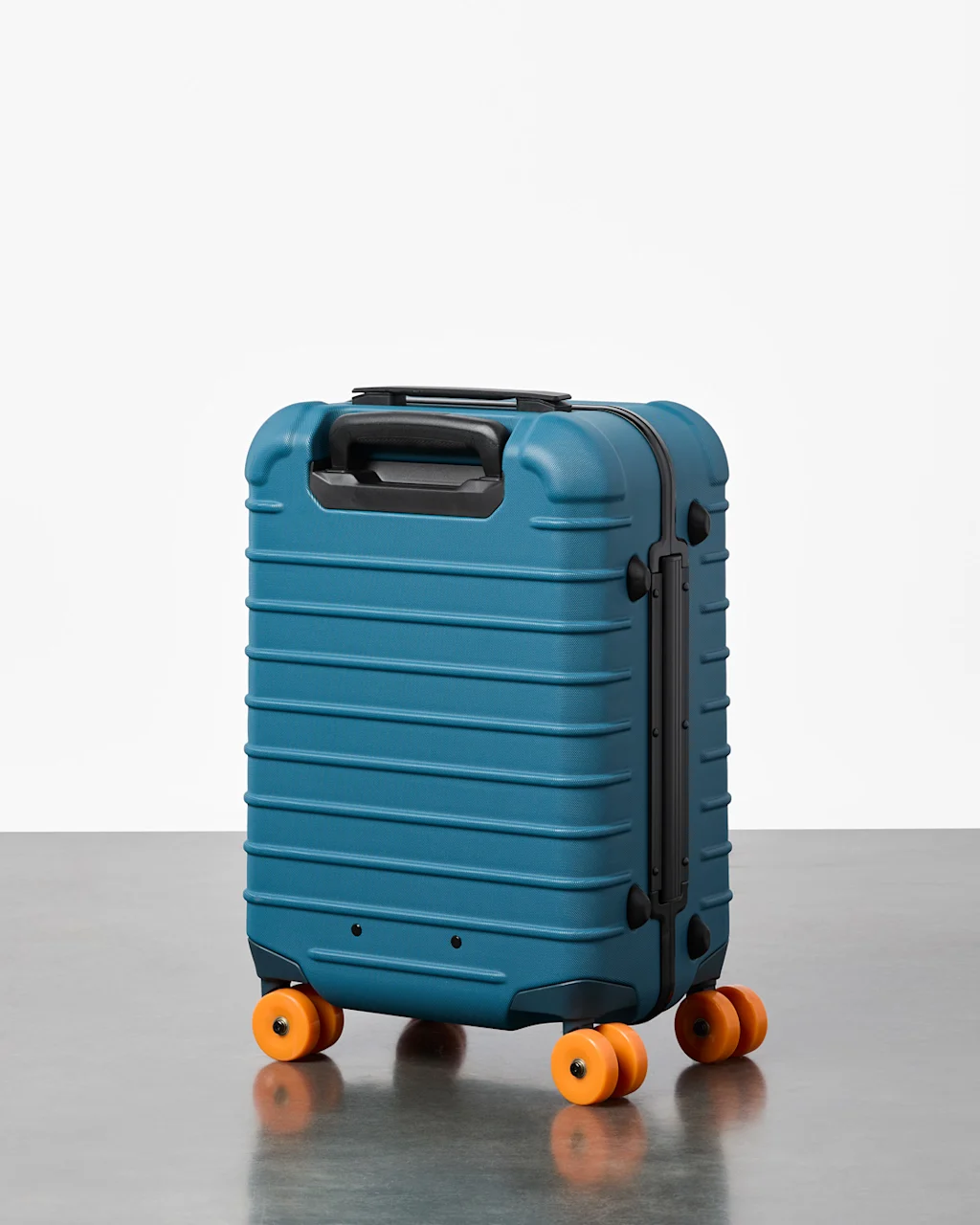
The swappable wheels also create an opportunity for customization. Customers can buy additional wheel colors on Cotopaxi’s site and mix and match them to create their own combinations. And if the wheels break during a trip, travelers can have a new set quickly shipped—or pick some up in one of Cotopaxi’s two dozen stores around the world—and replace them. The tools required come packaged with the replacements, and the wheels are designed to swap in easily.
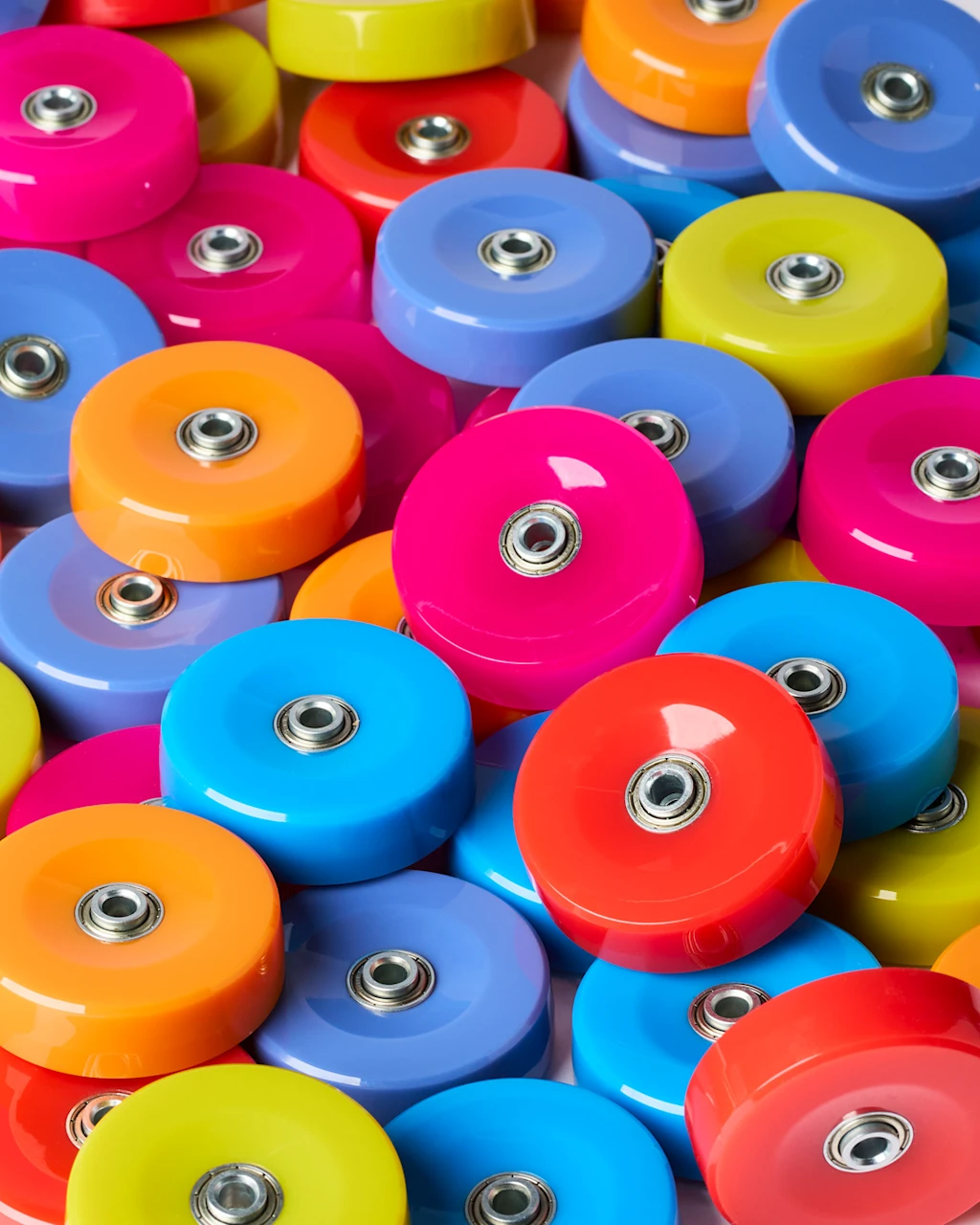
Creating a fixable, modular suitcase took years. While polycarbonate shells are an established manufacturing technology, engineering a hard-side bag that opens and closes reliably without a zipper—while still meeting international carry-on dimensions and TSA requirements—meant working closely with Cotopaxi’s factory partners and conducting extensive durability testing. Cotopaxi landed on a shell made from recycled polycarbonate that Shumlas says has held up through her own six months of travel, including a four-week work trip across Asia.
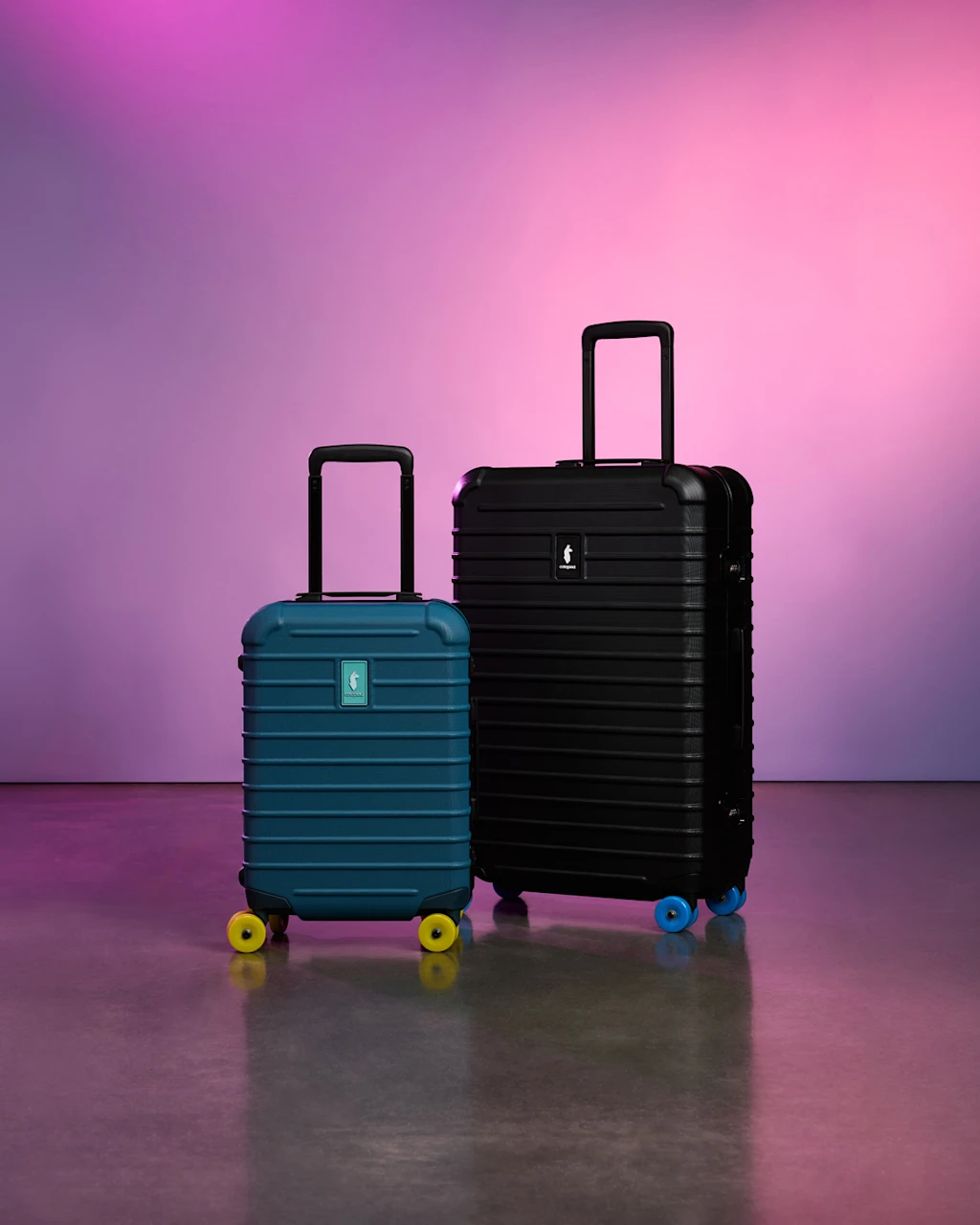
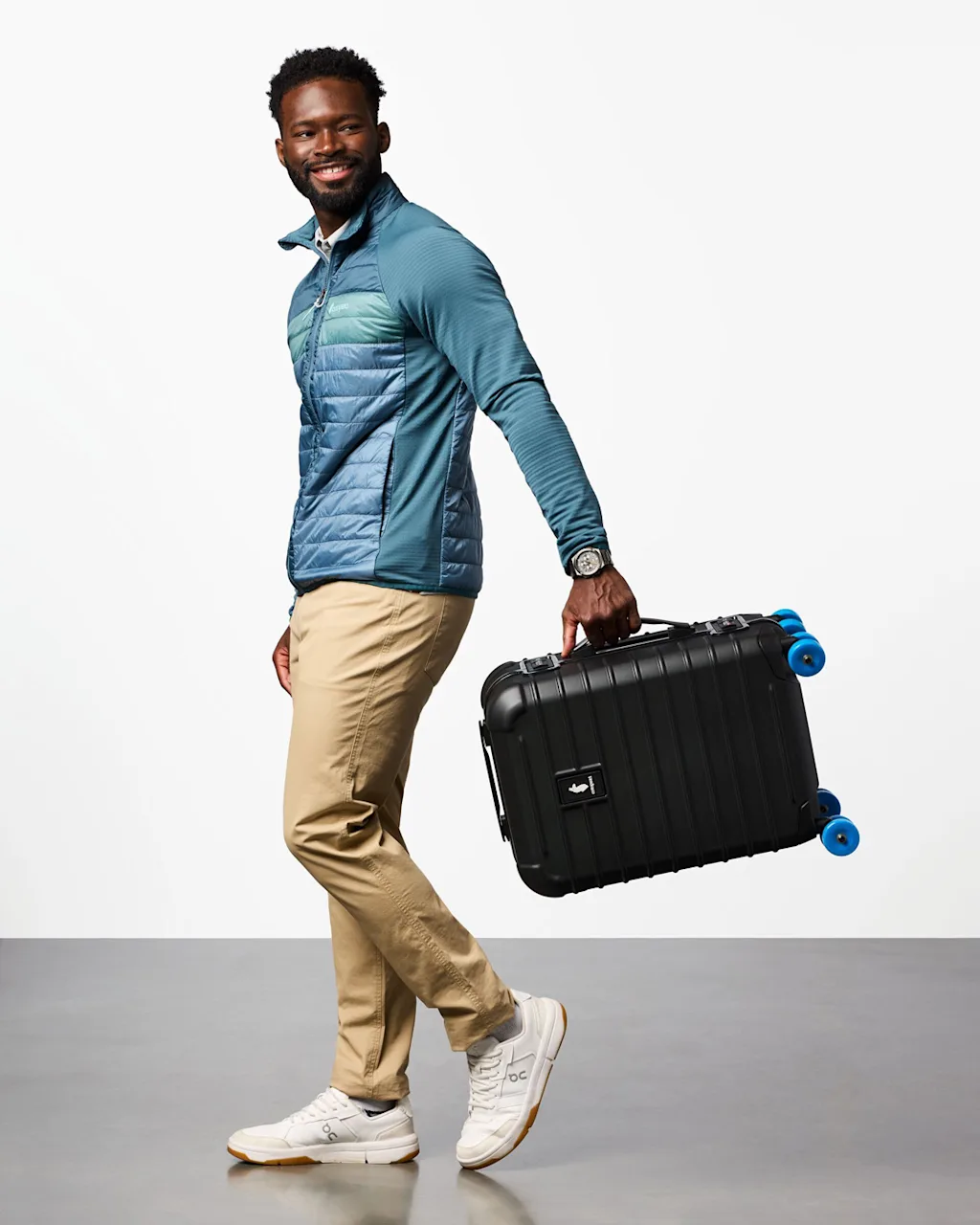
The bag launches in a carry-on and a checked size, each in three colorways, including a black version with blue wheels and two in Cotopaxi’s signature brighter palette. The llama logo sits front and center.
Growing The Business
For Cotopaxi, hard-side luggage is the logical next step. The brand has built its business on backpacks and technical apparel, and already sells a softer, two-wheel rolling duffel. Shumlas argues hard-side luggage is a category that has been quietly begging for the kind of systems thinking that outdoor brands routinely apply to backpacks and tents, where repairability and field-serviceability are taken for granted.
That expansion comes at a moment when other direct-to-consumer luggage players have been struggling. Paravel, a sustainability-focused startup, filed for bankruptcy earlier this year. Away, once valued at $1.4 billion, has cut staff in multiple rounds. Both companies scaled rapidly on venture capital. Cotopaxi, by contrast, has funded Coraza’s development without external capital. “We’ve funded all of the innovation investment in this line through our own operating cash flow, and continue to do so,” Shumlas says.
The company now operates more than 20 stores in the U.S. and abroad, including recently opened locations in Japan and South Korea and a new store in Jackson, Wyoming. Shumlas says Cotopaxi opens two to three stores a year, concentrated in urban markets near college campuses—a demographic that has taken to the brand’s backpacks as everyday commuter gear. International expansion, which began five years ago in Tokyo, has become a strategic priority.
Coraza is priced in line with other premium outdoor-adjacent luggage, and replacement parts—wheels, latches, and liners—are free for the life of the bag. In a category where planned obsolescence has long been part of the business model, Cotopaxi is betting that a suitcase built to be fixed by its owner will stand out.
“How often do brands have a lifetime warranty on your luggage, but you’re shipping it back and potentially being shipped a new one?” Shumlas says. “What we’ve done is we’ve made it entirely repairable.”