Pragmatic idealist. Worked on Ubuntu Phone. Inkscape co-founder. Probably human.
1540 stories
·
12 followers

Texas sues biggest TV makers, alleging smart TVs spy on users without consent

1 Share

Texas Attorney General Ken Paxton sued five large TV manufacturers yesterday, alleging that their smart TVs spy on viewers without consent. Paxton sued Samsung, the longtime TV market share leader, along with LG, Sony, Hisense, and TCL.

“These companies have been unlawfully collecting personal data through Automated Content Recognition (‘ACR’) technology,” Paxton’s office alleged in a press release that contains links to all five lawsuits. “ACR in its simplest terms is an uninvited, invisible digital invader. This software can capture screenshots of a user’s television display every 500 milliseconds, monitor viewing activity in real time, and transmit that information back to the company without the user’s knowledge or consent. The companies then sell that consumer information to target ads across platforms for a profit. This technology puts users’ privacy and sensitive information, such as passwords, bank information, and other personal information at risk.”

The lawsuits allege violations of the Texas Deceptive Trade Practices Act, seeking damages of up to $10,000 for each violation and up to $250,000 for each violation affecting people 65 years or older. Texas also wants restraining orders prohibiting the collection, sharing, and selling of ACR data while the lawsuits are pending.

Texas argues that providing personalized content and targeted advertising are not legitimate purposes for collecting ACR data about consumers. The companies’ “insatiable appetite for consumer data far exceeds what is reasonably necessary,” and the “invasive data harvesting is only needed to increase advertisement revenue, which does not satisfy a consumer-necessity standard,” the lawsuits say.

Paxton is far from the first person to raise privacy concerns about smart TVs. The Center for Digital Democracy advocacy group said in a report last year that in “the world of connected TV, viewer surveillance is now built directly into the television set, making manufacturers central players in data collection, monitoring, and digital marketing.” We recently published a guide on how to break free from smart TV ads and tracking.

“Companies using ACR claim that it is all opt-in data, with permission required to use it,” the Center for Digital Democracy report said. “But the ACR system is bundled into new TVs as part of the initial set-up, and its extensive role in monitoring and sharing viewer actions is not fully explained. As a consequence, most consumers would be unaware of the threats and risks involved in signing up for the service.”

“Mass surveillance system” in US living rooms

Pointing out that Hisense and TCL are based in China, Paxton’s press release said the firms’ “Chinese ties pose serious concerns about consumer data harvesting and are exacerbated by China’s National Security Law, which gives its government the capability to get its hands on US consumer data.”

“Companies, especially those connected to the Chinese Communist Party, have no business illegally recording Americans’ devices inside their own homes,” Paxton said. “This conduct is invasive, deceptive, and unlawful. The fundamental right to privacy will be protected in Texas because owning a television does not mean surrendering your personal information to Big Tech or foreign adversaries.”

The Paxton lawsuits, filed in district courts in several Texas counties, are identical in many respects. The complaints allege that TVs made by the five companies “aren’t just entertainment devices—they’re a mass surveillance system sitting in millions of American living rooms. What consumers were told would enhance their viewing experience actually tracks, analyzes, and sells intimate details about everything they watch.”

Using ACR, each company “secretly monitors what consumers watch across streaming apps, cable, and even connected devices like gaming consoles or Blu-ray players,” and harvests the data to build profiles of consumer behavior and sell the data for profit, the complaints say.

We contacted the five companies sued by Texas today. Sony, LG, and Hisense responded and said they would not comment on a pending legal matter.

Difficult opt-out processes detailed

The complaints allege that the companies fail to obtain meaningful consent from users. The following excerpt is from the Samsung lawsuit but is repeated almost verbatim in the others:

Consumers never agreed to Samsung Watchware. When families buy a television, they don’t expect it to spy on them. They don’t expect their viewing habits packaged and auctioned to advertisers. Yet Samsung deceptively guides consumers to activate ACR and buries any explanation of what that means in dense legal jargon that few will read or understand. The so-called “consent” Samsung obtains is meaningless. Disclosures are hidden, vague, and misleading. The company collects far more data than necessary to make the TV work. Consumers are stripped of real choice and kept in the dark about what’s happening in their own homes on Samsung Smart TVs.

Samsung and other companies force consumers to go through multistep menus to exercise their privacy choices, Texas said. “Consumers must circumnavigate a long, non-intuitive path to exercise their right to opt-out,” the Samsung lawsuit said. This involves selecting menu choices for Settings, Additional Settings, General Privacy, Terms & Privacy, Viewing Information Services, and, finally, “Disable,” the lawsuit said. There are “additional toggles for Interest-Based Ads, Ad Personalization, and Privacy Choices,” the lawsuit said.

The “privacy choices are not meaningful because opt-out rights are scattered across four or more separate menus which requires approximately 15+ clicks,” the lawsuit continued. “To fully opt-out of ACR and related ad tracking on Samsung Smart TVs, consumers must disable at least two settings: (1) Viewing Information Services, and (2) Interest-Based Ads. Each of which appear in different parts of the setting UI. Conversely, Samsung provides consumers with a one-click enrollment option to opt-in during the initial start-up process.”

When consumers first start up a Samsung smart TV, they “must click through a multipage onboarding flow before landing on a consent screen, titled Smart Hub Terms & Conditions,” the lawsuit said. “Upon finally reaching the consent screen, consumers are presented with four notices: Terms & Conditions: Dispute Resolution Agreement, Smart Hub U.S. Policy Notice, Viewing Information Services, and Interest-Based Advertisements Service U.S. Privacy Notice, with only one button prominently displayed: I Agree to all.”

Deceptive trade practices alleged

It would be unreasonable to expect consumers to understand that Samsung TVs come equipped with surveillance capabilities, the lawsuit said. “Most consumers do not know, nor have any reason to suspect, that Samsung Smart TVs are capturing in real-time the audio and visuals displayed on the screen and using the information to profile them for advertisers,” it said.

Paxton alleges that TV companies violated the state’s Deceptive Trade Practices Act with misrepresentations regarding the collection of personal information and failure to disclose the use of ACR technology. The lawsuit against Hisense additionally alleges a failure to disclose that it may provide the Chinese government with consumers’ personal data.

Hisense “fails to disclose to Texas Consumers that under Chinese law, Hisense is required to transfer its collections of Texas consumers’ personal data to the People’s Republic of China when requested by the PRC,” the lawsuit said.

The TCL lawsuit doesn’t include that specific charge. But both the Hisense and TCL complaints say the Chinese Communist Party may use ACR data from the companies’ smart TVs “to influence or compromise public figures in Texas, including judges, elected officials, and law enforcement, and for corporate espionage by surveilling those employed in critical infrastructure, as part of the CCP’s long-term plan to destabilize and undermine American democracy.”

The TVs “are effectively Chinese-sponsored surveillance devices, recording the viewing habits of Texans at every turn without their knowledge or consent,” the lawsuits said.

Read full article

Comments


Read the whole story
tedgould
6 hours ago
reply
Texas, USA
Share this story
Delete

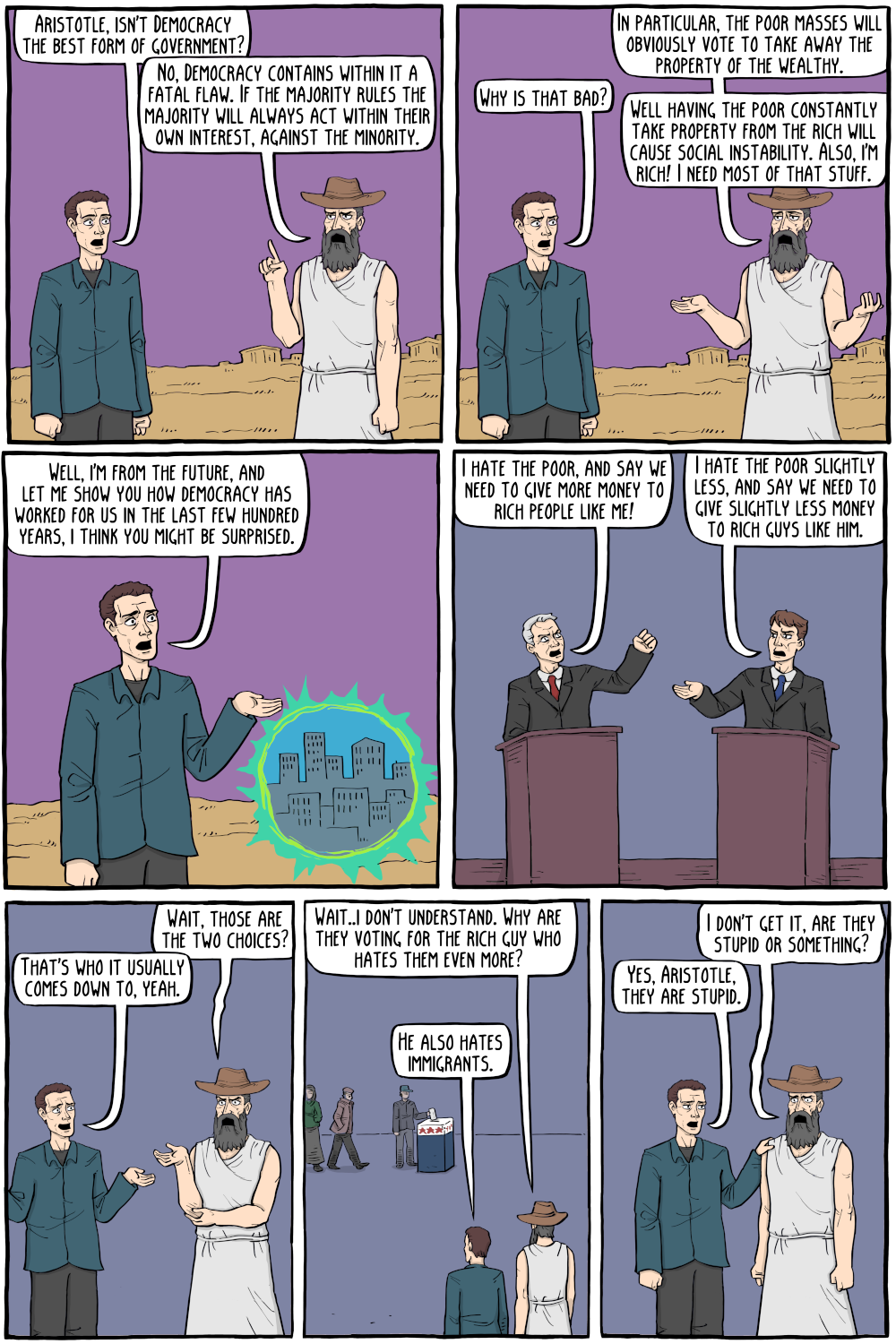
Aristotle on Democracy

2 Shares
PERSON:
Read the whole story
tedgould
17 hours ago
reply
Texas, USA
Share this story
Delete

Investors commit quarter-billion dollars to startup designing “Giga” satellites

1 Share

A startup established three years ago to churn out a new class of high-power satellites has raised $250 million to ramp up production at its Southern California factory.

The company, named K2, announced the cash infusion on Thursday. K2’s Series C fundraising round was led by Redpoint Ventures, with additional funding from investment firms in the United States, the United Kingdom, and Germany. K2 has now raised more than $400 million since its founding in 2022 and is on track to launch its first major demonstration mission next year, officials said.

K2 aims to take advantage of a coming abundance of heavy- and super-heavy-lift launch capacity, with SpaceX’s Starship expected to begin deploying satellites as soon as next year. Blue Origin’s New Glenn rocket launched twice this year and will fly more in 2026 while engineers develop an even larger New Glenn with additional engines and more lift capability.

Underscoring this trend toward big rockets are other launchers like SpaceX’s Falcon 9 and Falcon Heavy, United Launch Alliance’s Vulcan, and new vehicles from companies like Rocket Lab, Relativity Space, and Firefly Aerospace. K2’s founders believe satellites will follow a similar progression, reversing a trend toward smaller spacecraft in recent years, to address emerging markets like in-space computing and data processing.

Mega, then Giga

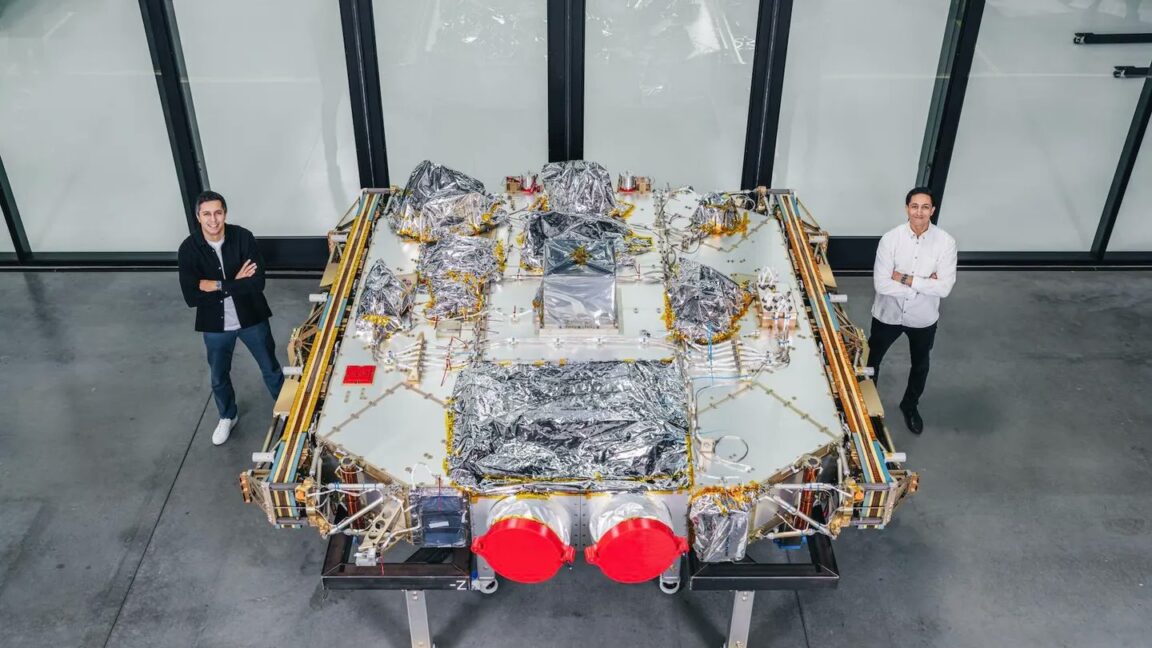
K2 is designing two classes of satellites—Mega and Giga—that it will build at an 180,000-square-foot factory in Torrance, California. The company’s first “Mega Class” satellite is named Gravitas. It is scheduled to launch in March 2026 on a Falcon 9 rocket. Once in orbit, Gravitas will test several systems that are fundamental to K2’s growth strategy. One is a 2o-kilowatt Hall-effect thruster that K2 says will be four times more powerful than any such thruster flown to date. Gravitas will also deploy twin solar arrays capable of generating 20 kilowatts of power.

“Gravitas brings our full stack together for the first time,” said Karan Kunjur, K2’s co-founder and CEO, in a company press release. “We are validating the architecture in space, from high-voltage power and large solar arrays to our guidance and control algorithms, and a 20 kW Hall thruster, and we will scale based on measured performance.”

The US Space Force is funding the Gravitas demo mission. K2 says it has secured $500 million in “signed contracts” with commercial and US government customers.

K2 says Gravitas is “on par with the largest satellites that have ever been produced.” But K2 won’t stop there. The firm’s next satellite iteration, known as Giga, is specifically designed to fly on super-heavy rockets like Starship and New Glenn. Underpinning Giga is its ability to generate up to 100 kilowatts of power per satellite, several times more power than any spacecraft other than the International Space Station.

The idea is that K2 will manufacture the satellite chassis, and customers will use it to accommodate their own unique payloads. Examples of missions Giga can support include AI computing, high-throughput networks, and mass-produced giant telescopes for astronomy.

“Our north star is simple,” Kunjur said. “If we build these platforms well, we get to ask new questions about what’s possible in orbit.”

K2’s vertical integration strategy is different from legacy satellite manufacturers. Instead of buying components from a widely distributed supply chain, K2 says it has designed its own electric thruster, large solar arrays, radiation-tolerant avionics, reaction wheels, and more. The company flew a small mission in orbit earlier this year to test its flight computer and reaction wheel in low-Earth orbit.

This approach will reduce manufacturing costs, according to K2. But K2 also aims to scale up production to build numerous Mega- and Giga-class satellites to further drive down prices. K2’s founders believe there’s high demand for these massive satellite platforms, and rocket companies will soon be ready to send them to orbit.

Read full article

Comments


Read the whole story
tedgould
4 days ago
reply
Texas, USA
Share this story
Delete

EFF Benefit Poker Tournament at DEF CON 33

1 Share

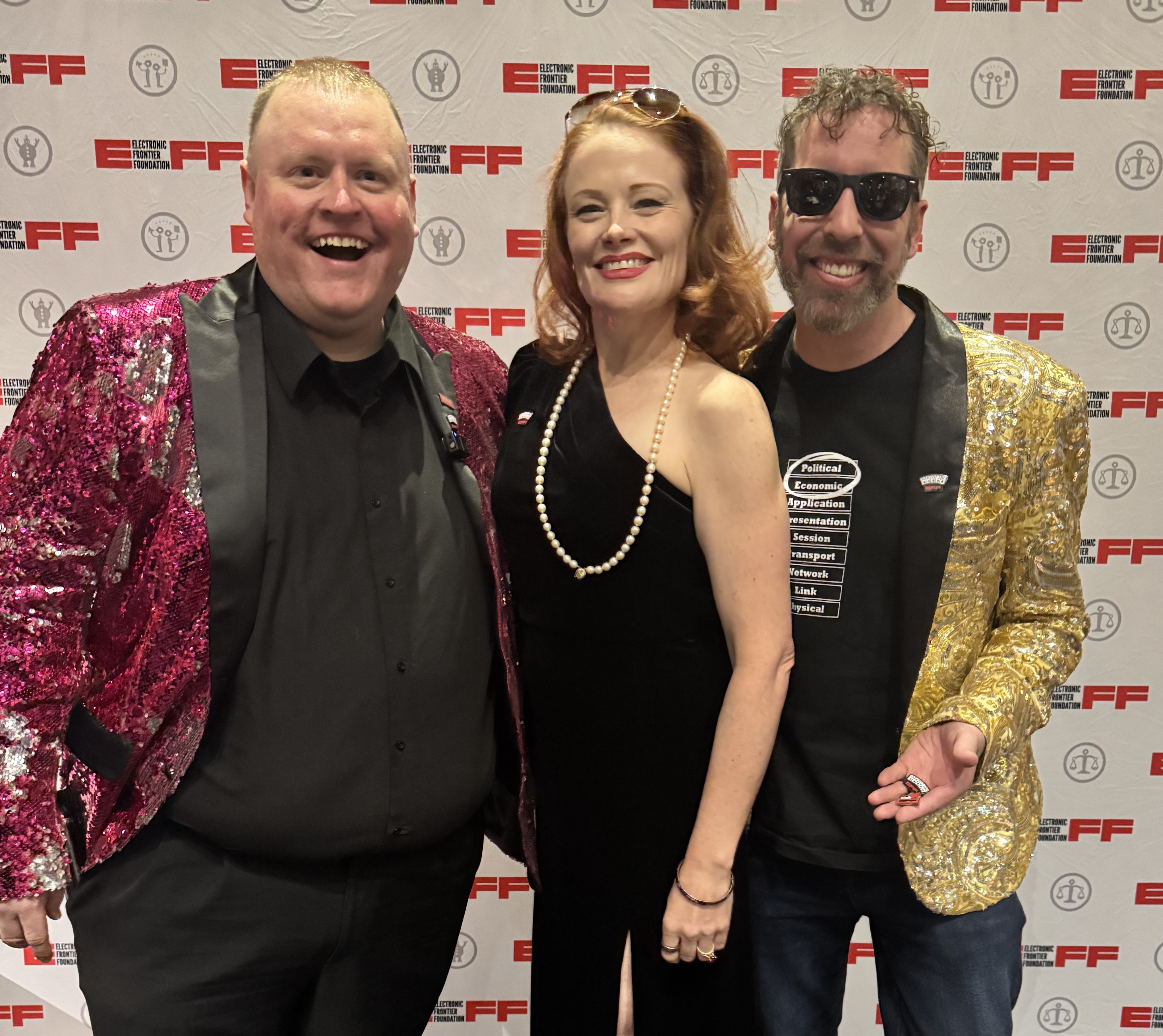
In the brand new Planet Hollywood Poker Room, 48 digital rights supporters played No-Limit Texas Hold’Em in the 4th Annual EFF Benefit Poker Tournament at DEF CON, raising $18,395 for EFF.

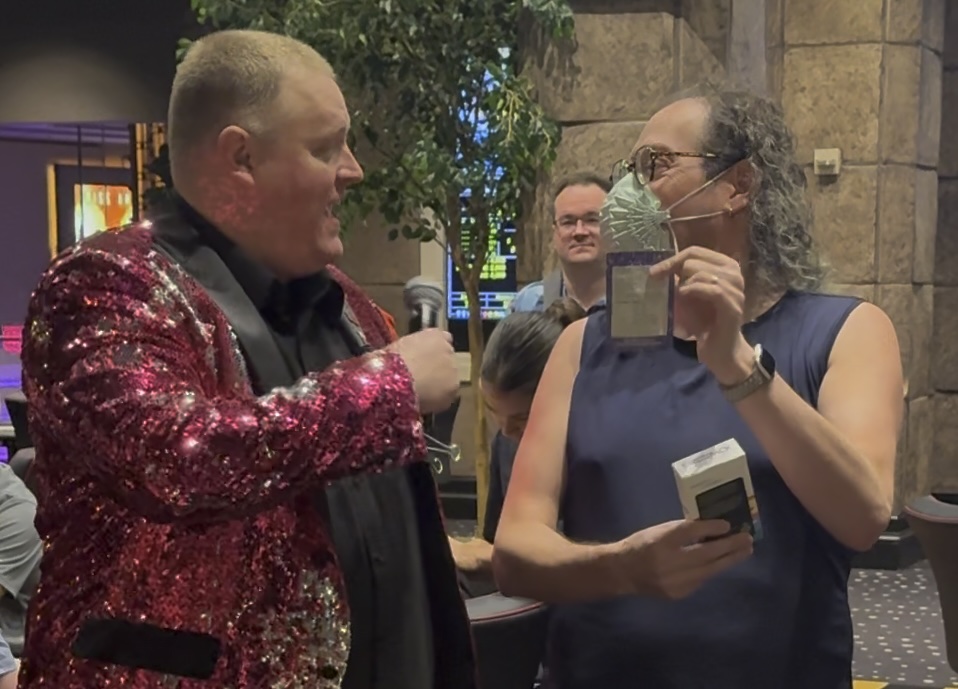
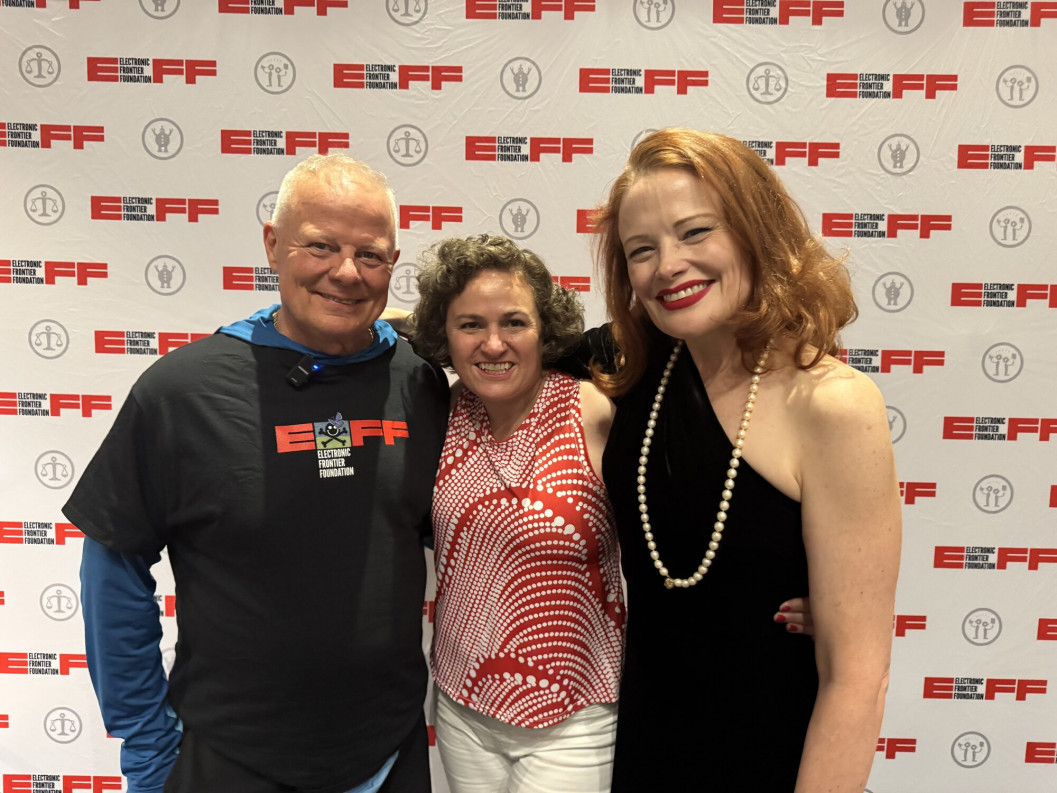
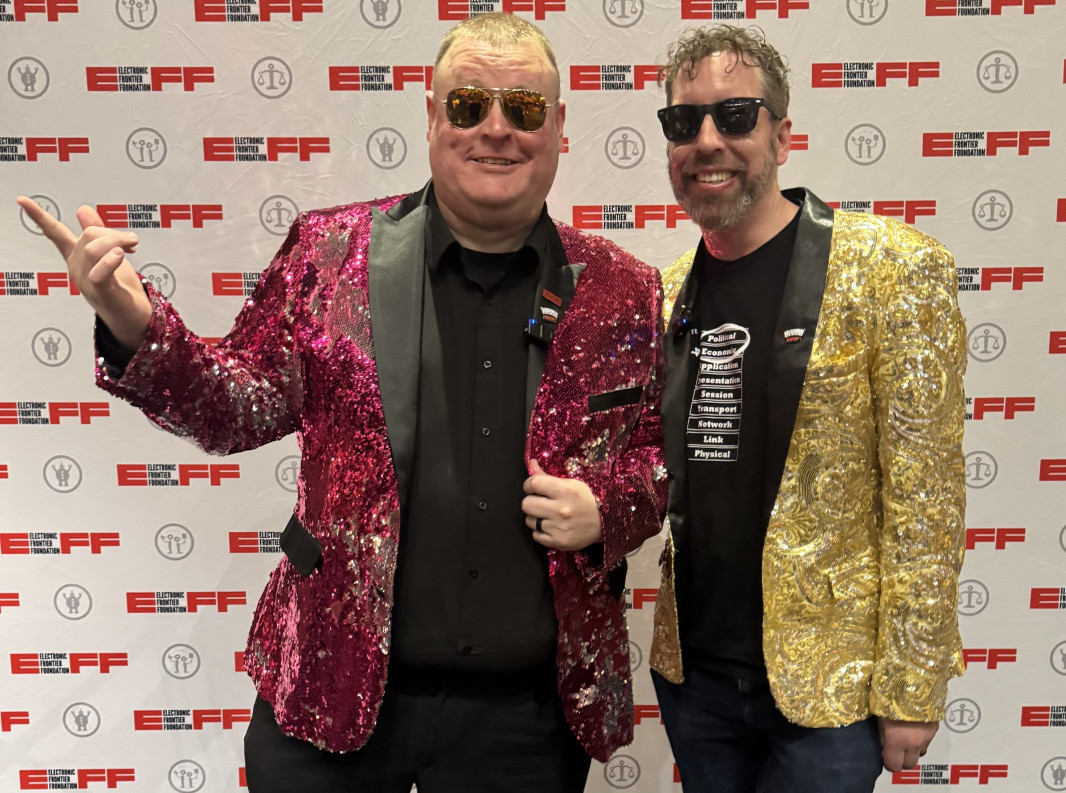
The tournament was hosted by EFF board member Tarah Wheeler and emceed by lintile, lending his Hacker Jeopardy hosting skills to help EFF for the day.

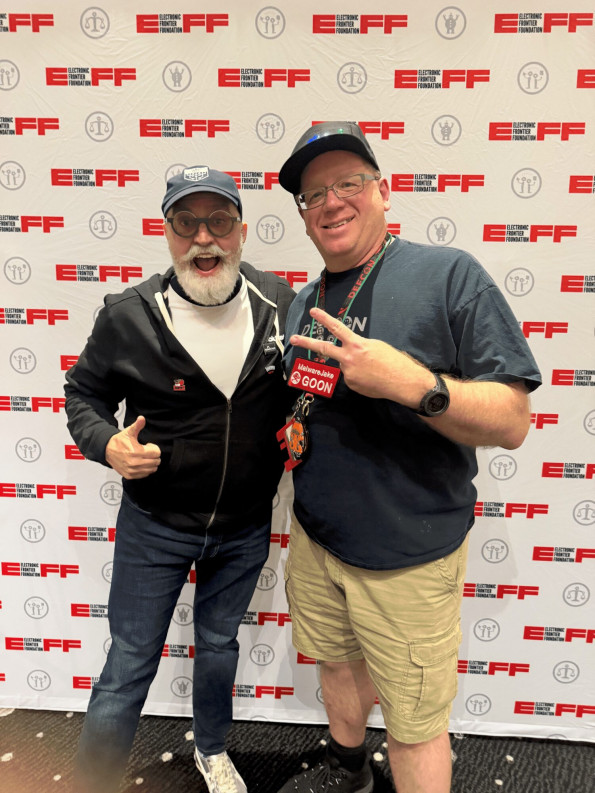
Every table had two celebrity players with special bounties for the player that knocked them out of the tournament. This year featured Wendy Nather, Chris “WeldPond” Wysopal, Jake “MalwareJake” Williams, Bryson Bort, Kym “KymPossible” Price, Adam Shostack, and Dr. Allan Friedman.

Excellent poker player and teacher Jason Healey, Professor of International Affairs at Columbia University’s School of International and Public Affairs noted that “the EFF poker tournament is where you find all the hacker royalty in one room."

The day started at with a poker clinic run by Tarah’s father, professional poker player Mike Wheeler. The hour-long clinic helped folks get brushed up on their casino literacy before playing the big game.

Mike told the story of first teaching Tarah to play poker with jellybeans when she was only four. He then taught poker noobs how to play and when to check, when to fold, and when to go all-in.

After the clinic, lintile roused the crowd to play for real, starting the tournament off by announcing “Shuffle up and deal!”

The first hour saw few players get knocked out, but after the blinds began to rise, the field began to thin, with a number of celebrity knock outs.
At every knockout, lintile took to the mic to encourage the player to donate to EFF, which allowed them to buy back into the tournament and try their luck another round.

Jay Salzberg knocked out Kym Price to win a l33t crate.


Kim Holt knocked out Mike Wheeler, collecting the bounty on his head posted by Tarah, and winning a $250 donation to EFF in his name. This is the second time Holt has sent Mike home.

Tarah knocked out Adam Shostack, winning a number of fun prizes, including a signed copy of his latest book, Threats: What Every Engineer Should Learn From Star Wars.

Bryson Bort was knocked out by privacy attorney Marcia Hofmann.

Play continued for three hours until only the final table of players remained: Allaen Friedman, Luke Hanley, Jason Healey, Kim Holt, Igor Ignatov, Sid, Puneet Thapliyal, Charles Thomas and Tarah Wheeler herself.

As blinds continues to rise, players went all-in more and more. The most exciting moment was won by Sid, tripling up with TT over QT and A8s, and then only a few hands later knocking out Tarah, who finished 8th.

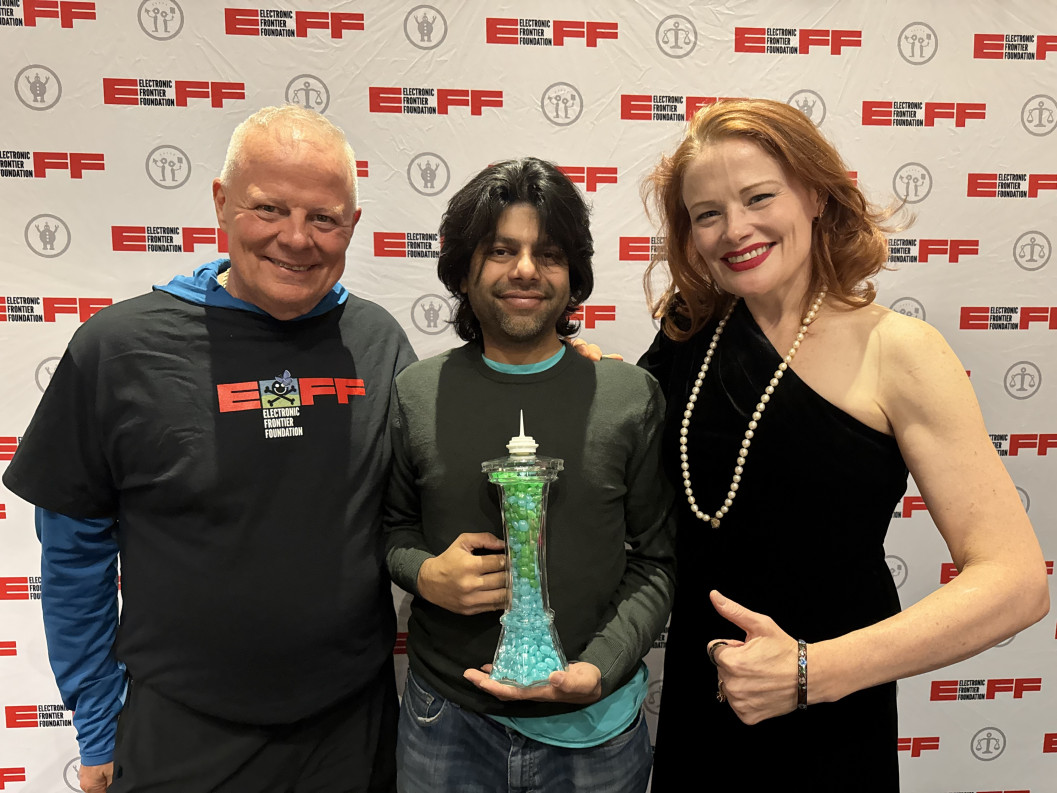
For the first time, the Jellybean Trophy sat on the final table awaiting the winner. This year, it was a Seattle Space Needle filled with green and blue jellybeans celebrating the lovely Pacific Northwest where Tarah and Mike are from.

The final three players were Allen Friedman, Kim Holt and Syd. Sid doubled up with KJ over Holt’s A6, and then knocked Holt out with his Q4 beating Holt’s 22.

Friedman and Sid traded blinds until Allan went all in with A6 and Syd called with JT. A jack landed on the flop and Syd won the day!

Sid becomes the first player to win the tournament more than once, taking home the jellybean trophy two years in a row.

It was an exciting afternoon of competition raising over $18,000 to support civil liberties and human rights online. We hope you join us next year as we continue to grow the tournament. Follow Tarah and EFF to make sure we have chips and a chair for you at DEF CON 34.

Be ready for this next year’s special benefit poker event: The Digital Rights Attack Lawyers Edition! Our special celebrity guests will all be our favorite digital rights attorneys including Cindy Cohn, Marcia Hofmann, Kurt Opsahl, and more!

Photo Gallery


Read the whole story
tedgould
4 days ago
reply
Texas, USA
Share this story
Delete

Harold Hamm, Oklahoma Oil Tycoon, Allies With Trump to Reshape U.S. Energy

1 Share
Harold Hamm, an Oklahoma oil tycoon, has played a central role in reshaping energy policy by allying himself with President Trump.

Read the whole story
tedgould
4 days ago
reply
Texas, USA
Share this story
Delete

Forget flowers: These ancient plants attract pollinators by getting hot

1 Share
Beetles (<em>Rhopalotria furfuracea</em>) visit a male cone of the cycad plant <em>Zamia furfuracea</em>, whose cones produce heat during pollination.

While many modern plants use colorful flowers to attract pollinators, ancient palm-like plants called cycads lure them by heating up and glowing in the infrared.

(Image credit: Michael Calonje)

Read the whole story
tedgould
5 days ago
reply
Texas, USA
Share this story
Delete
Next Page of Stories